Buddhist Sunday School Lessons (Venerable Sumangalo)

23/04/202020:05(Xem: 8647)
Buddhist Sunday School Lessons (Venerable Sumangalo)

Buddhist Sunday School Lessons
Venerable Sumangalo
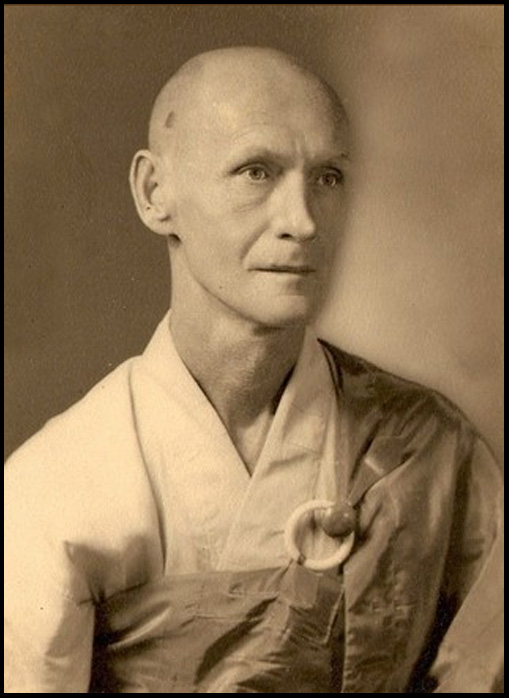
venerable Sumangalo

Venerable Sumangalo
was a Buddhist monk of Chinese Mahayana Buddhism in Singapore and Malaysia. 
               Born: 1903, Birmingham, Alabama, United States
Died: February 1963, Penang, Malaysia


CONTENTS

1 – Preface

2 – Notes to Parents and Teachers

3 – How to Impart Buddhism to Children

4 – Devotional Exercises

5 – The Life Story of Lord Buddha

6 – The One Main Teaching

7 – The Three Refuges

8 – The Five Precepts

9 – The Four Noble Truths

10 – Right Understanding

11 – Right Aims

12 – Right Speech

13 – Right Action

14 – Right Livelihood

15 – Right Effort

16 – Right Mindfulness

17 – Right Meditation

18 – The Law of Karma

19 – Rebirth

20 – The Three Signs

21 – The Seven Jewels

22 – The Three Evils

23 – Our Duties Towards Others

24 – The Meaning of Wesak

25 – Trusting to Luck

26 – The Wheel of the Law

27 – The Teaching of all Buddha

28 – The Greatest Secret in the World

29 – Filial Piety

30 – Sincerity

31 – Perseverance

32 – The Drawings in this Book

33 – Remembering Lord Buddha

34 – A Buddhist Catechism


Typing for Quang Duc Homepage in Melbourne, Australia:
Quảng Đại Thắng (Brendan Trần) & Quảng Đại Khánh (Nathan Trần)
https://quangduc.com/p52208a68074/buddhist-sunday-school-lessons-venerable-sumangalo


Gửi ý kiến của bạn
Tắt
Telex
VNI
Tên của bạn
Email của bạn
14/10/2023(Xem: 13184)
Our immense pleasure is to present to you this remarkable conference book – Buddhism: A Historical and Practical Vision. Inside these pages lies a stunning tapestry of wisdom created by the joint dedication and hard work of young Vietnamese Buddhist monks and nuns scholars who have explored the legacy of Buddhism in depth. From exploring the compatibility and integration of Mahāyāna Buddhism’s teachings with realistic political theory on leadership and the introduction Buddhist philosophy and the establishment and significance of Buddhist universities in the United States, each paper stands as a testament to the vibrant diversity and enduring relevance of Buddhist thought. Among the thought-provoking papers, you will discover insightful investigations into the practical theory of impermanence as a means to enhance one’s own living experience. Additionally, a critical interpretation of Nibbāna from Dr. Ambedkar’s perspective in the Indian Engaged Buddhist Movement sheds light
11/09/2023(Xem: 11254)
It is my great pleasure to receive an invitation from the Senior Venerable Thich Nguyen Tang to write an introduction for his new book. I don’t think that my very poor introduction will be sufficient for his book. Perhaps it could be unfair to his great endeavor - better delete it. However, I take this opportunity to express my sincere gratitude towards him. I stayed in his monastery for a short time, during which time I was so well treated by him as his own monastery brother. I write this introduction very happily, even it is poor, to offer him a tribute. On one hand, I consider it as my great obligation and on the other hand it is my privilege.
25/07/2023(Xem: 14757)
Dealing with the chosen work, I observe that a puggala has been present in the world because of dependent origination (paṭiccasamuppāda) or continuity of change (santāna). The five masses of elements (pañcakkhandhā), which constitute the puggala and the world around him, are without any substance (anattā), impermanent (anicca) and they are really causes of grief (dukkha)...
20/07/2023(Xem: 3894)
During his recent visit to Melbourne, Australia to attend the Conference on Sociology, at the Melbourne Convention Centre. Professor Dr. Ryushun Kiyofuji visited Quang Duc Monastery, 30 minutes from downtown Melbourne. On this occasion, I had the chance to interview him about the current situation of Buddhism in Japan.
12/06/2023(Xem: 6033)
“One person, mendicants, arises in the world for the welfare and happiness of the people, out of compassion for the world, for the benefit, welfare, and happiness of gods and humans. What one person? The Realized One, the perfected one, the fully awakened Buddha. This is the one person, mendicants, who arises in the world for the welfare and happiness of the people, out of compassion for the world, for the benefit, welfare, and happiness of gods and humans.” *
30/03/2023(Xem: 8781)
War - we all know this word. There were too many battles in this world since we were the nomads, wandering over sea and land up to the time when the acquisition of material goods increased over time and possession became more powerful in their desire to master and dominate the world. In family and society, from the young to the dignitary, none of them want to give up possession but always to get more. The more assets, the greater desire. The more one tries to get, the stronger greed and selfishness fortifies.
14/01/2023(Xem: 20417)
Lunar New Year 2023 Festival at Quang Duc Monastery, Fawkner, Victoria, Australia
10/12/2022(Xem: 4073)
There can be no success in getting happiness out of Lord Buddha’s Dharma until we understand and use ‘Sila’, which is a Pali-Sanskrit word meaning morality. The Five Precepts are often called ‘Pancasila’, which means ‘the Five Moralities’. As a rule, these five moralities are recited after the Three Refuges, and are usually considered as a necessary part of the ceremony of becoming a Buddhist. Everyone who understands these rules knows it is good and wise to follow them all, but many persons have weak characters and do not make a real attempt to be guided by these Five Rules that all Buddhists must follow. They are:
