- 1. Preface
- 2. Notes to Parents and Teachers
- 3. How to Impart Buddhism to Children
- 4. Devotional Exercises
- 5. The Life Story of Lord Buddha
- 6. The One Main Teaching
- 7. The Refuges
- 8. The Five Precepts
- 9. The Four Noble Truths
- 10. Right Understanding
- 11. Right Aims
- 12. Right Speech
- 13. Right Action
- 14. Right Livelihood
- 15. Right Effort
- 16. Right Mindfulness
- 17. Right Meditation
- 18. The Law of Karma
- 19. Rebirth
- 20. The Three Signs
- 21. The Seven Jewels
- 22. The Three Evils
- 23. Our Duties Towards Others
- 24. The Meaning of Wesak
- 25. Trusting to Luck
- 26. The Wheel of the Law
- 27. The Teaching of all Buddha
- 28. The Greatest Secret in the World
- 29. Filial Piety
- 30.Sincerity
- 31. Perseverance
- 32. The Drawings in this Book
- 33. Remembering Lord Buddha
- 34. A Buddhism Catechism
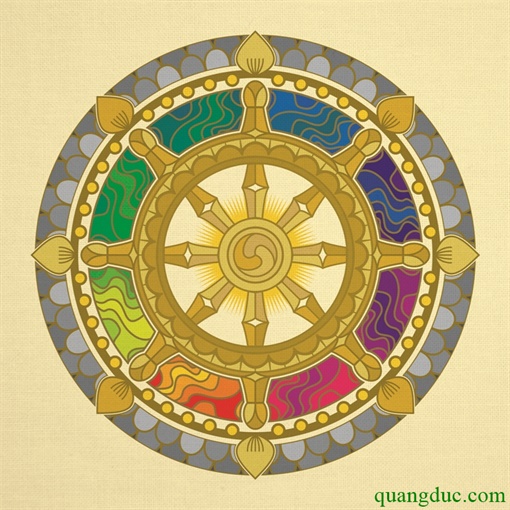
THE TEACHING OF ALL BUDDHAS
Venerable Sumangalo
“Cease to do evil, do good; purify the heart and mind; this is the teaching of all the Buddhas”.
(1) “Cease to do evil”.
All of us know the difference between right and wrong. We must not do anything we know will be hurtful to anyone, including ourselves. Birds and animals, too, must not harmed.
When we speak of not hurting anyone or anything, we mean far more than just not causing physical pain. We must not speak unkind words or invent untrue stories about anyone. We must not do anything wrong even by neglect or carelessness. For example, we forget to fill the dog’s water-bowl and the poor dog suffers from thirst. There are many ways to cause suffering simply by carelessness. When we have caused unhappiness to others by any act or word of ours, or by failing to do what we know is right, then we are guilty of doing evil. It is not a good excuse that something wrong we have done is only a “small evil”. When Lord Buddha advised us “Cease to do evil”, he did not mean only big mis-deeds, but also all evil.
Ceasing to do all that we know to be wrong is like cleaning a house. Just as we throw away old, broken furniture, we must also clear away wrong thinking and wrong acting. But, if we merely cease to do evil, then we are like a person who has only an empty room in which to live. When we throw away wrong thinking and wrong acting, we must then use right thinking and right acting and this is what is meant by:
(2) “Do good”.
Point one is negative, it is “do not”. Point two is positive and “do”. There is an old Indian story about a man who was always very unhappy. Many people could not understand why he was not happy. Everyone said he was “a very good man”. But that was not at all true. He was merely not a bad man. He did nothing evil, but also he did nothing good. His life was a negative “do not” life. Happiness comes from a life of right balanced between negative and positive. If we have only the “do not” part of right living, then we have the minus sign (-) we use in arithmetic. When we add the “do” part of right living then we have the plus sign (+) in our lives.
When we do good we bring happiness to ourselves and others. Doing wrong often brings excitement or some degree of false joy, but true happiness never comes from doing wrong. Therefore, at the very beginning of the time when we start to think for ourselves, we must try to get correct balance in our lives by clearing away all wrong thinking, wrong talking and wrong actions and replacing them with good thoughts, good speech and good actions.
Everyone wants to be happy, but no one can succeed in being really and truly happy until, first of all, he ceases to do evil and tries hard to do actual good.
(3) “Purify heart and mind”.
This point three is very important. When the heart is pure then there is no desire to do evil. When the mind is pure we do not even think of evil, and doing good becomes easier because we actually wish to do good.
Once, a long time ago in China, there was a very famous monk who was known all over the country for his goodness and wisdom. In fact this monk was so well known that even the Emperor wanted a chance to talk with him. A messenger was sent from the imperial palace to the monastery on a distant mountain top where the famous monk lived, asking him to come to the capital and give a lecture to the Emperor on Buddhism.
A month or so later the monk arrived at the Emperor’s palace and was received with great honour. That same day the Emperor was celebrating his sixty-fifth birthday and he wanted to do something holy in honour of the occasion. So he decided to visit the famous monk and listen to a sermon. The Emperor and Empress and all the members of the imperial household went into a large hail of the palace and invited the monk to speak to them. The monk asked them the subject on which they would like him to speak. The Emperor replied, “Please tell us what is the deepest teaching of Buddhism”. The old monk bowed to the Emperor and answered, “Cease to do evil, do good, purify heart and mind; this is the teaching of all the Buddhas”. The Emperor was not pleased with this answer and said, “This is not a deep teaching – even a child of five years can understand it”. “Ah, yes”, replied the monk – “a child of five years can certainly understand this teaching, but even an old man of sixty-five years may find it hard to put into practice”.
THE AGELESS TRUTH
Commit no wrong, but good deeds do
And let your hearts be pure;
All Buddhas teach this doctrine true
That will fore’er endure.
Hate is not overcome by hate
By love alone ‘tis quelled;
This is a truth of ancient date,
Today still unexcelled.
-Paul Carus.
QUESTIONS
1. Can you recite the little verse that gives the teaching of all the Buddhas?
2. Getting rid of bad thought and bad action (evil) is like cleaning a …? It is like throwing away broken…?
3. Getting good thoughts and good actions in our lives is like brining new… into a house that has been cleaned.
4. Must we be kind to people only? What about pets and all animals and birds?
5. Is evil plus (+) or minus (-)?
6. Evil is a minus (-) because
- It takes away happiness.
- It adds happiness.
Which of these two statements is true?
7. What do we mean by “purify heart and mind”?
8. Can a child understand our Buddhist religion?
9. What did the old monk say to the Emperor about a child of five years and a man of sixty-five years?
10. Try to memorize the famous verse about the teaching of all the Buddhas.


%7Cutmcsr%3D(direct)%7Cutmcmd%3D(none)%3B%2B__utmv%3D830994949.-%3B)