- 1. Preface
- 2. Notes to Parents and Teachers
- 3. How to Impart Buddhism to Children
- 4. Devotional Exercises
- 5. The Life Story of Lord Buddha
- 6. The One Main Teaching
- 7. The Refuges
- 8. The Five Precepts
- 9. The Four Noble Truths
- 10. Right Understanding
- 11. Right Aims
- 12. Right Speech
- 13. Right Action
- 14. Right Livelihood
- 15. Right Effort
- 16. Right Mindfulness
- 17. Right Meditation
- 18. The Law of Karma
- 19. Rebirth
- 20. The Three Signs
- 21. The Seven Jewels
- 22. The Three Evils
- 23. Our Duties Towards Others
- 24. The Meaning of Wesak
- 25. Trusting to Luck
- 26. The Wheel of the Law
- 27. The Teaching of all Buddha
- 28. The Greatest Secret in the World
- 29. Filial Piety
- 30.Sincerity
- 31. Perseverance
- 32. The Drawings in this Book
- 33. Remembering Lord Buddha
- 34. A Buddhism Catechism
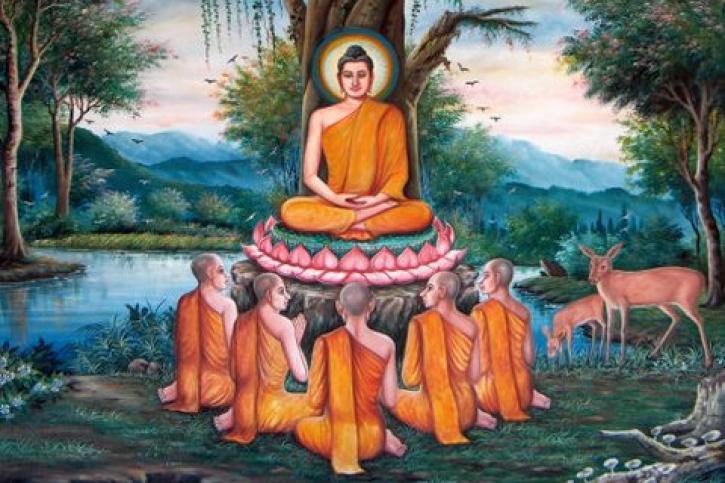
A BUDDHIST CATECHISM
Venerable Sumangalo
Ques. 1 What is your religion?
Ans. I am a Buddhist.
Ques. 2 What is Buddhism?
Ans. Buddhism is the teaching of all the Buddhas.
Ques. 3 What is a Buddha?
Ans. A Buddha is a very wise man who has freed himself from all ignorance.
Ques. 4 Is Buddha a God?
Ans. No, He is far greater than any God or ordinary man.
Ques. 5 Why is He greater than any God or ordinary man?
Ans. Because of His own efforts He found the Truth.
Ques. 6 Is the word Buddha a proper name?
Ans. No, the word Buddha is not a proper name; it is a title.
Ques. 7 What does the word Buddha mean?
Ans. The word Buddha means “The Enlightened One.”
Ques. 8 Have there been more than one Buddha?
Ans. Yes, there have been many Buddhas.
Ques. 9 When did the Buddha live?
Ans. He lived more than 2,500 years ago.
Ques. 10 What was he called?
Ans. He was called Shakyamuni.
Ques. 11 What does Shakyamuni mean?
Ans. Shakyamuni means “Wise man of the Shakyas.”
Ques. 12 What was Shakyamuni’s real name?
Ans. Siddhartha Gautama
Ques. 13 Who were his parents?
Ans. King Suddhodana and Queen Maya.
Ques. 14 Who did King Suddhodana rule over?
Ans. He ruled a tribe in India called Shakya.
Ques. 15 Where was Prince Siddhattha born?
Ans. In Lumbini’s garden
Ques. 16 When was he born?
Ans. 623 B.C. (approximately).
Ques. 17 What happened when he was born?
Ans. Wisemen foretold that he would either become a great king or a greater teacher.
Ques. 18 What did the wise hermit Asita say about the child?
Ans. “This child will become a supreme Buddha, and will show all men the path to Salvation.”
Ques. 19 Why did Asita weep after saying this?
Ans. Because he would not live to see the glory of the child.
Ques. 20 Was the King glad to hear what the wise men said about his son?
Ans. No, the King did not want his son to become a great Teacher, but a great King.
Ques. 21 What did the King do to prevent the prince from becoming a Buddha?
Ans. He made lovely palaces, and tried to keep away knowledge of old age, sickness and death.
Ques. 22 Did this plan of the King succeed?
Ans. No, when the prince was walking in the city, he met an old man, a sick man and a funeral.
Ques. 23 What did he think when he became aware of these things?
Ans. How can I find a way to save all men from such suffering?
Ques. 24 What did the prince decide to do?
Ans. To leave his home and go out and search for the way
Ques. 25 Was it hard for him to leave his home?
Ans. Yes, because he had a beautiful wife and a dear little baby boy.
Ques. 26 Did his wife try to stop his going?
Ans. No, because he left in the middle of the night without telling her anything.
Ques. 27 How old was he when he left home?
Ans. Twenty-nine years old.
Ques. 28 Where did he go first?
Ans. To a place named Rajagriha.
Ques. 29 Who visited him there?
Ans. King Bimbisara and his court.
Ques. 30 Where di the prince go then?
Ans. To the forests where there were wise men, whose disciple he became.
Ques. 31 What did these wise men teach?
Ans. They taught that by prayer and by suffering the way of truth could be found.
Ques. 32 Did the prince find the truth in this way?
Ans. No.
Ques. 33 What did he do then?
Ans. He went to the forest and tortured his body, and ate very little food.
Ques. 34 Who joined him there?
Ans. Five Holy men.
Ques. 35 How long did the prince continue to do these things?
Ans. For nearly six years till he nearly died of weakness and pain.
Ques. 36 What did he do then?
Ans. He decided to not torture himself any more, but to look for the Truth within his own mind.
Ques. 37 Did he succeed this time?
Ans. Yes, while sitting beneath the Bodhi tree he suddenly saw all Truth.
Ques. 38 What does transcend mean?
Ans. Transcend means to rise above and go beyond.
Ques. 39 Would you call a person a Buddhist who had merely been born of Buddhist parents?
Ans. Certainly not, a Buddhist is one who professes a belief in the Buddha.
Ques. 40 Sum up the teaching of the Buddha in one verse.
Ans. To cease from all evil, to attain virtue, to cleanse one’s own heart.
Ques. 41 I notice you say, religion of the Buddhas; have there been many Buddhas?
Ans. Yes, Shakyamuni was the fourth Buddha in the present Kalpa.
Ques. 42 Who, and what, are the three guides that a Buddhist is supposed to follow?
Ans. The three guides are Buddha, The Law and The Brotherhood.
Ques. 43 What do we mean by this?
Ans. We mean that we regard the Lord Buddha as our all wise Teacher.
Ques. 44 How does Buddhism compare with other religions regarding the number of its followers?
Ans. The followers of Buddha outnumber those of every other religious teacher.
Ques. 45 What is the estimated number?
Ans. About 500,000,000 – one-third the population of the world.
Ques. 46 Have ward been fought or human blood been spilled to spread Buddha’s Law?
Ans. So far as we know, it has not caused the spilling of a drop of blood.
Ques. 47 How then do you account for the wonderful way it has spread?
Ans. Because founded on Truth, its moral teaching is sufficient for all needs.
Ques. 48 How did the Buddha spread his Dharma?
Ans. For 45 years, Buddha travelled widely in preaching the Law, sending his wisest followers.
Ques. 49 Is Buddhism older than Christianity?
Ans. Yes, about 500 years older.
Ques. 50 What are the signs by which we know that it is spreading?
Ans. Translations of Buddhist Literature, Buddhist lecturers, and Buddhist societies.
Ques. 51 What do we mean when we say that the Buddha became Enlightened?
Ans. We mean that he saw the absolute Truth.
Ques. 52 What are those four truths called?
Ans. They are called “The Four Noble Truths.”
Ques. 53 What did the Buddha mean by “All life is suffering?”
Ans. He meant that the very fact of existence is suffering.
Ques. 54 What is the cause of suffering?
Ans. Ignorance and desire.
Ques. 55 What does the “Cessation of suffering” mean?
Ans. Nirvana.
Ques. 56 What is the path by which we attain Nirvana?
Ans. The Noble Eight-fold Path.
Ques. 57 What is the Noble Eight-fold Path?
Ans. Highest Understanding, Mindedness, Speech, Action, Livelihood, Endeavour,
Recollectedness and Concentration.
Ques. 58 Divide the Eight-fold Path into three divisions.
Ans. Knowledge or Mind Culture, Realization or Wisdom, Manifestation or Morality.
Ques. 59 Which belong to the knowledge division?
Ans. Highest Endeavour, Highest Recollectedness, Highest Concentration
Ques. 60 Which come under the heading of Realization?
Ans. Highest Understanding, Highest Mindedness.
Ques. 61 Which come under the heading of Manifestation?
Ans. Highest Speech, Highest Action and Highest Livelihood.
Ques. 62 What is Karma?
Ans. Karma is the law of cause and effect.
Ques. 63 What is the meaning of Nirvana?
Ans. Attainment of Truth.
Ques. 64 What is the ultimate goal towards which we are striving?
Ans. We are striving to attain Salvation.
Ques. 65 What does Salvation mean?
Ans. Freedom from ignorance, attainment of the Truth.
Ques. 66 Is knowledge sufficient without action, and inner realization of truth?
Ans. No, knowledge must lead to correct action and inner realization.
Ques. 67 Has Buddhism any right to be considered a scientific religion?
Ans. Yes, but Buddhism does not at all depend on science for its source of truth.
Ques. 68 Is Buddhism a tolerant religion?
Ans. Yes, it respects everyone’s right to make their own decisions.
Ques. 69 What is a good way to describe Buddhism in a few words?
Ans. It is a plan for living in such a way as to desire highest benefit from life.
Ques. 70 Is it likely that a passionate Buddhist could ever adopt another religion.
Ans. No, because the Buddha-dharma answers the deepest questions of our minds and meets the
noblest needs of our emotions.
THE INVOCATION OF THE ETERNAL
“O, Thou Eternal One,
Thou Perfection of Time,
Thou Truest Truth,
Thou Immutable Essence of all Change,
Thou Most excellent Radiance of Mercy,
Thou Infinite Compassion,
Thou Pity, Thou Charity,
Thou who art called the Buddha,
We take refuge in Thee!”
(An invocation from Thailand – Revised Translation)
With bad advisors forever left behind,
From paths of evil he departs for eternity,
Soon to see the Buddha of Limitless Light
And perfect Samantabhadra’s Supreme Vows.
The supreme and endless blessings
of Samantabhadra’s deeds,
I now universally transfer.
May every living being, drowning and adrift,
Soon return to the Pure Land of
Limitless Light!
~The Vows of Samantabhadra~
I vow that when my life approaches its end,
All obstructions will be swept away;
I will see Amitabha Buddha,
And be born in His Western Pure Land of
Ultimate Bliss and Peace
When reborn in the Western Pure Land,
I will perfect and completely fulfil
Without exception these Great Vows,
To delight and benefit all beings.
~The Vows of Samantabhadra Avatamsaka Sura~
DEDICATION OF MERIT
May the merit and virtue
accrued from this work
adorn Amitabha Buddha’s Pure Land,
and relieve the suffering of
those on the three paths below.
May those who see or hear of these efforts
generate Bodhi-mind,
spend their lives devoted to the Buddha Dharma,
and finally be reborn together in
the Land of Ultimate Bliss.
Homage to Amita Buddha!
NAMO AMITABHA


%7Cutmcsr%3D(direct)%7Cutmcmd%3D(none)%3B%2B__utmv%3D982893136.-%3B)