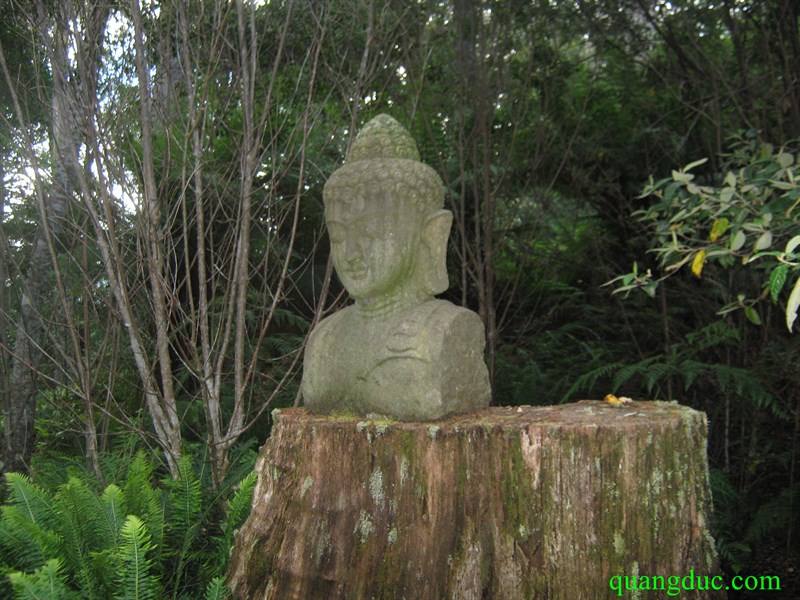
Hermitage of Joyful Living (Thất Tâm Hỷ)

07/04/201507:08(Xem: 4639)
Hermitage of Joyful Living (Thất Tâm Hỷ)

That Tam Hy (1)


Hermitage of Joyful Living (Thất Tâm Hỷ)


Almost five years ago on June 1st 2010, I arrived with my two dogs in Tasmania to start a Ph D in Buddhist philosophy at the University of Tasmania and to continue my training in Clinical Pastoral Education, a form of professional preparation for chaplains and Pastoral/Contemplative Care Workers. On our way south to Hobart my attention was drawn to my right, looking towards the north west of this island state. I felt that I had an appointment with somewhere in that direction and that it would be important for my life.

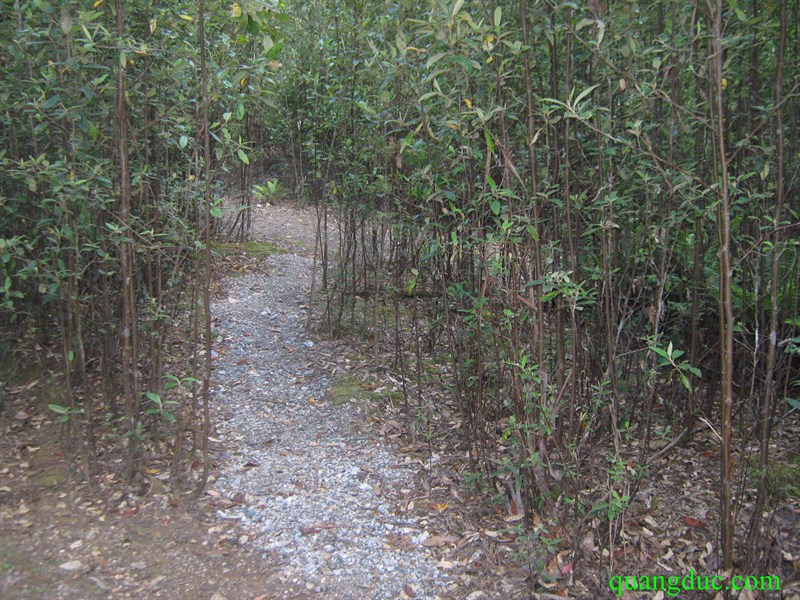
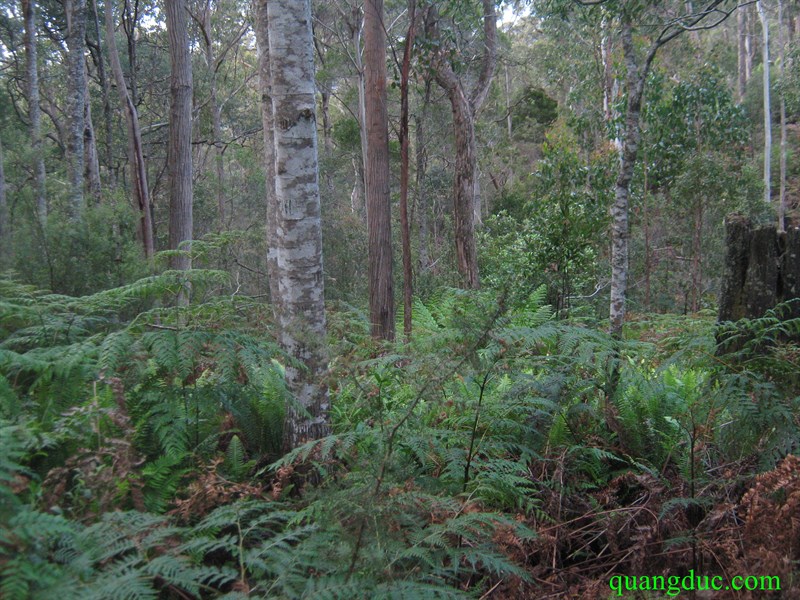
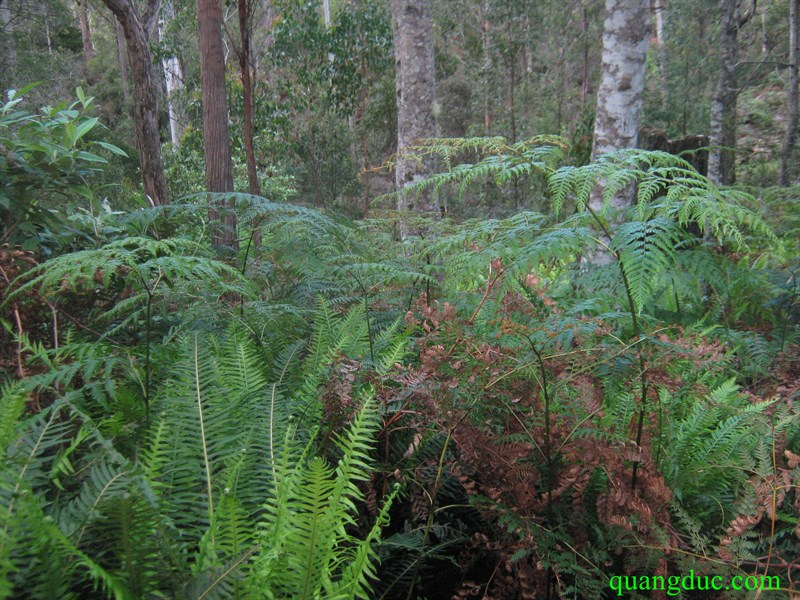
A year later in 2011I went up to Ulverstone to give a talk on Buddhist views on death and dying to a group of hospice volunteers. I knew there was a Buddhist centre on the way and so I organised to break the journey and stay in the Centre. It is in a very ancient valley with lots of trees, many wallabies and paddy melons and birds of many different types. It felt to me as though people who were about to be reborn were just hiding in the gaps of the rocks in the hill sides, waiting. 

I stayed in a beautiful wooden cottage. It rained very softly all night and was deeply quiet. I built a fire in the stove and enjoyed the peace, the sound of rain on the roof and the crackling wood fire. The next morning I was very moved by the physical beauty of the place.

In the following October I went back for a week to enjoy the peace and quiet again. I met a few people in the valley who gathered weekly at the centre for meditation. Two of  these people lived on another property five kilometres away. Over the period of the next year I got to know them both a little better and told them of my hope to find a quiet place where I could stay to write my Ph D. They offered me the opportunity to build a small hut on their property. 

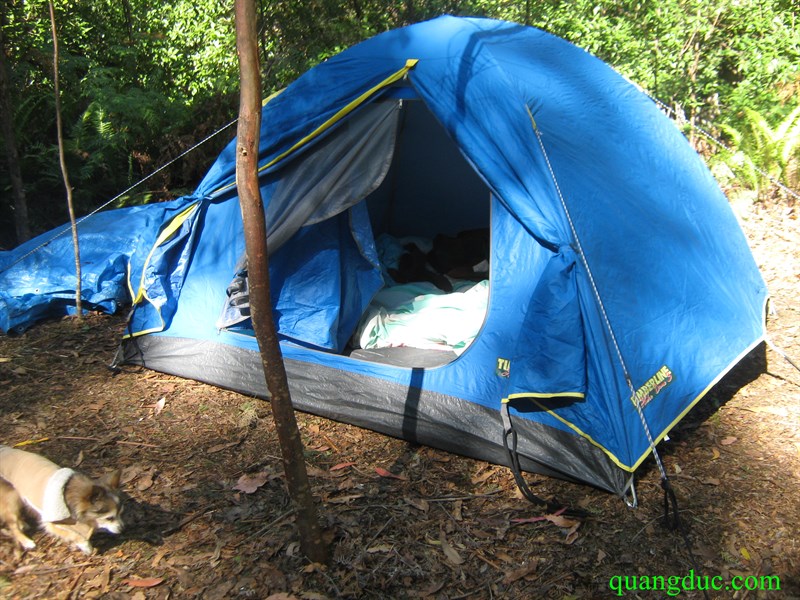
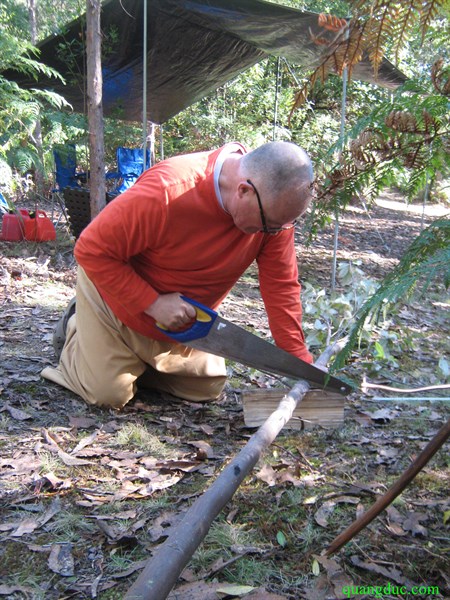
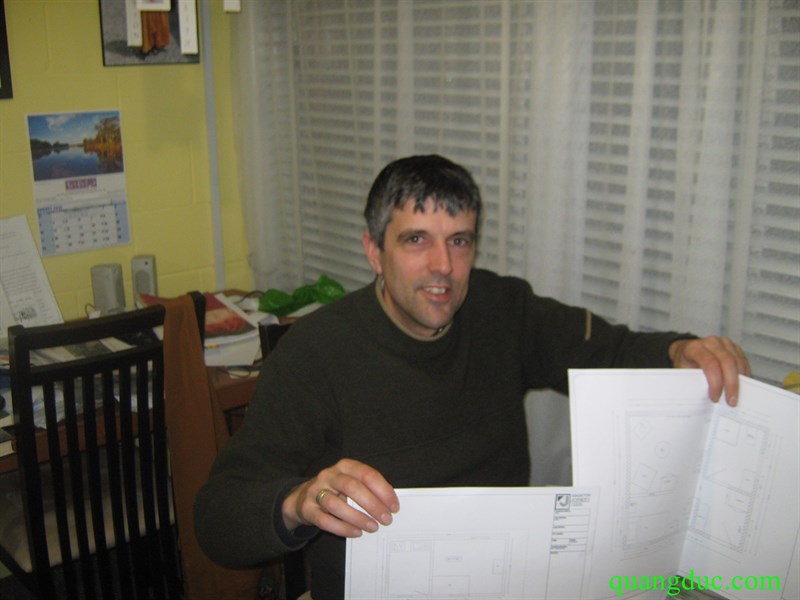
Since then, in 2012, we have developed our initial idea and so this week-end, Easter 2015, we beganthe process of clearing the ground to build the hermitage. It will be a small wooden building of one room for sleeping, cooking, eating, studying and meditating in and there will be a bathroom/laundry and store room attached. My plan is to spend at least three months of the year there for nhập thất  (solitary retreat) during the Buddhist retreat season, Nhập Hạ. The rest of the year the hermitage will be available for other people who want to have long term retreats while I am teaching, visiting my family and hopefully spending time at Trúc Lâm Đà Lạt  and with other monks in the Trúc Lâm school.

Last week two friends, a married couple, visited me. I told them that I was about to start building the hermitage over Easter and that I had saved $6,000 dollars from Dana offerings that Vietnamese people in Adelaide and Melbourne had given me towards building it. Included in this is $2,000 given to me by one of my cousins in Adelaide. The husband said “We’ll give you the money to build the floor” which of course is the first thing that gets built. I am really touched by the confidence and value that all of these people have placed in this project. I hope to have it finished and liveable by the end of 2016 so that in 2017, when I go onto the aged pension, I can spend perhaps a year there practising meditation.

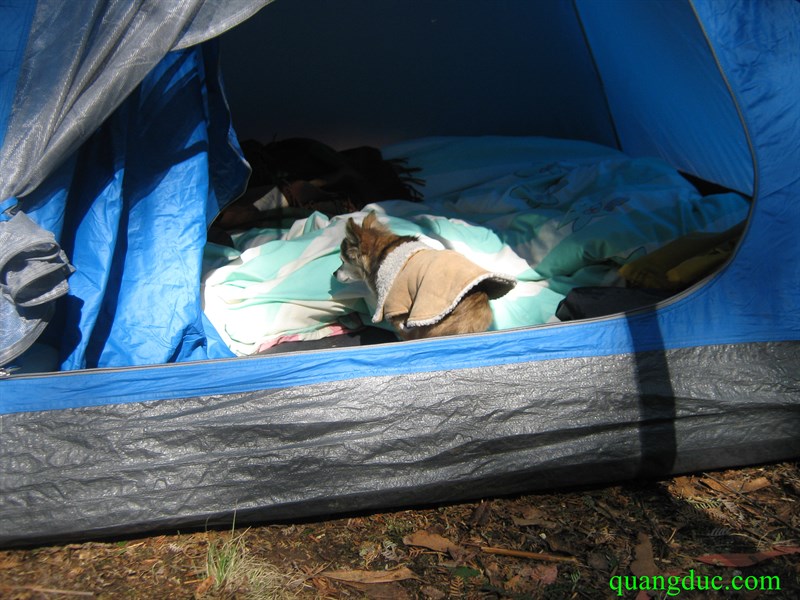
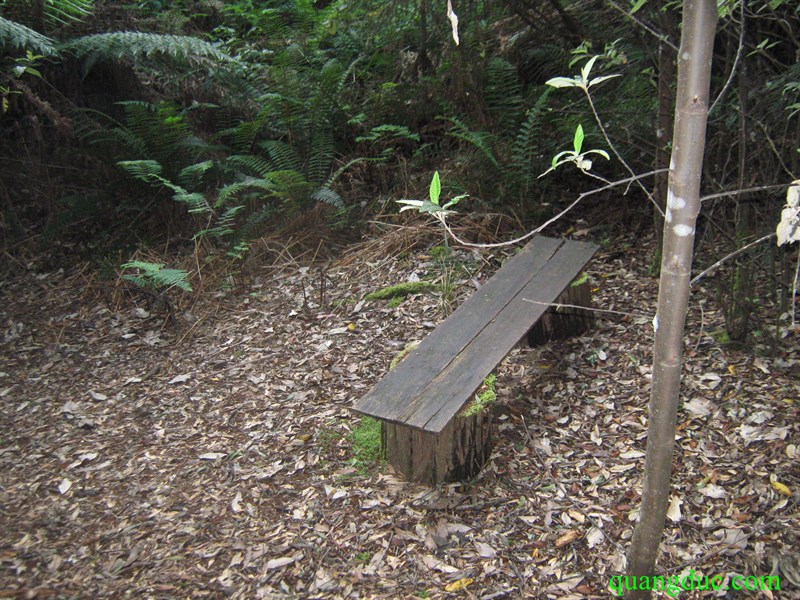
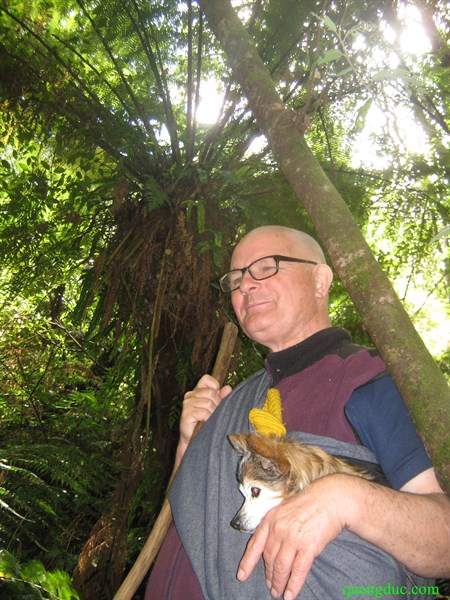
The hermitage will be called Thất Tâm Hỷ or Hermitage of Joyful Living. Tâm Hỷ was the Dharma name I gave to  a very lovely lady who lived here in Hobart. She had breast cancer and she asked me if I would visit her and care for her spiritually. I did so over three years. She and her husband took the Three Refuges and Five Precepts with me at the end of 2012 and last June I conducted her funeral. This lady was a very joyful person even during the most difficult times of her illness and she was greatly loved by many people here in Hobart.  Her husband is a joiner and I will be helping him as we build our Thất. Here are some photos I have taken of our progress so far. We have this weekend laid out the hermitage and tested the soil to determine the kind of foundation we will need.

Best wishes
Thích Trúc Thông Pháp.

That Tam Hy (1)That Tam Hy (10)That Tam Hy (11)That Tam Hy (12)That Tam Hy (13)That Tam Hy (2)That Tam Hy (3)That Tam Hy (4)That Tam Hy (5)That Tam Hy (6)That Tam Hy (7)That Tam Hy (8)That Tam Hy (9)
Ý kiến bạn đọc
09/04/201506:39
Khách
Happy to hear your good news.
Gửi ý kiến của bạn
Tắt
Telex
VNI
Tên của bạn
Email của bạn
21/03/2018(Xem: 9545)
Brief History of Buddhism , by Andrew Williams, The History of Buddhism spans from the 6th century BCE to the present; it arose in the eastern part of Ancient India, in and around the ancient Kingdom of Magadha (now in Bihar, India), and is based on the teachings of the unsurpassed supremely enlightened Shakyamuni Buddha (also Gautama Buddha), (Born as Prince Siddhārtha Gautama). This makes it one of the oldest religions practiced today. Buddhism evolved as it spread from the northeastern region of the Indian subcontinent through Central, East, and Southeast Asia. At one time or another, it has influenced most of the Asian continent.
27/07/2017(Xem: 8115)
The Most Venerables, Venerables, Professors, Researchers, Monks, Nuns, Lay Buddhists, and every bodies are present today. I would like to introduce cultural life, living spirituality of ASEAN countries and discussing the role of religion in this area.
21/04/2017(Xem: 4129)
For me, the Japanese language is the third foreign language I have learnt. In 1972, when I first arrived in Japan, I did not know any Japanese words. In 1971, after graduating from high school as an ordained monk, I was interested in going to college in Japan. I went to the Embassy of Japan in Southern Vietnam to inform myself and applied for a study trip. The result was that I arrived in Japan on 22 February 1972. First, I had to find a language school to learn Japanese. The Japanese language school Yottsuya accepted my application and I have learned Japanese for 9 months. Next, I passed the entrance test to enter the Teikyo University in Hachioji. I majored in Education at the Department of Literature.
11/04/2017(Xem: 10077)
Unlike most other NESB or CALD communities, the Vietnamese came to Australia in large numbers within a rather short period of time when the host multicultural society was still in its infancy. Their presence as an Asian visible minority was really a test to the strength of Australia’s political leadership and tolerance of the population at large. Initially without any intra structure of support, Vietnamese Australians learned to adapt themselves to the new social and cultural environment to become a vibrant community with tangible and intangible contributions to Australia. In future growth however, Vietnamese Australians appear to face a challenge as today’s new settlers from Vietnam bear little commonality in life experience and outlook with the essentially Vietnamese refugee community of the past few decades.
27/03/2017(Xem: 52309)
The Seeker's Glossary of Buddhism By Sutra Translation Committee of USA/Canada This is a revised and expanded edition of The Seeker's Glossary of Buddhism. The text is a compendium of excerpts and quotations from some 350 works by monks, nuns, professors, scholars and other laypersons from nine different countries, in their own words or in translation. The editors have merely organized the material, adding a few connecting thoughts of their own for ease in reading.
20/03/2017(Xem: 10946)
We warmly invite you to be part of the Vesak Friendship Dinner at Quang Minh Temple on Saturday 22nd April. Below for you is the Vesak Friendship Dinner flyer. Please print out, display and circulate among your community for everyone to come along... Book Your Tickets and Tables Today The Vesak Friendship Dinner brings our diverse and growing VictorianBuddhist community together for a social evening, vegetarian cuisine and traditional and cultural performances by groups from across Melbourne.
26/10/2016(Xem: 42113)
In India in the 6th century BC, Sakyamuni, "a wise man of the Sakya tribe", had been meditating under a tree when, suddenly, he was struck with the comprehension of all things. He became Buddha, meaning the « Illuminated ». His message, based on a pragmatic philosophy, taught how to free oneself from all needs in order to achieve illumination. After the death of the Enlightened One, his disciples – a few monks – began to spread his teachings all over India, from Ceylon to the Himalayan. Fearing man’s penc
11/04/2015(Xem: 15799)
Born out of a tragedy in Vietnam, the Vietnamese Australians’ presence appears to be different from others within the culturally and linguistically diverse (CALD) communities of Australia, in that, through government refugee intake, their community multiplied by 16 times over its first five years of resettlement since 1975, and 62 times during its first two decades. As more than 50% of the Vietnamese community are Buddhists, this rapid growth posed a great challenge to a handful of Vietnamese Buddhist monks and nuns who pioneered their Dharma journey in the early 1980’s by building temples and providing religious teaching and service for believers around Australia. They had to overcome secular obstacles as well as organisational and demographic changes. In the process, they have made notable contributions to Australia’s tangible and intangible cultural heritage.
01/04/2015(Xem: 12538)
Vesak festival at Melbourne city, 23-4-2015
22/11/2014(Xem: 4560)
The World Fellowship of Buddhists Review Vol 3 No 2 Sep-Dec 2557 (2014) - 1. Belong to WFB, and abide by constitution reflecting a non-profit, non-sectarian, nonpolitical international organisation. 2. Endeavours at all times to do its best to the extent possible, while meeting every situation with equanimity. No effort is made to solicit or acquire financial benefit or undue gain. 3. Does not necessarily endorse the views expressed by published contributors and reserves the right to review edit any contribution prior to publication. 4. Reserves the right to reject any contributions which might damage to, or misunderstanding about Buddhism, also to individuals, groups,