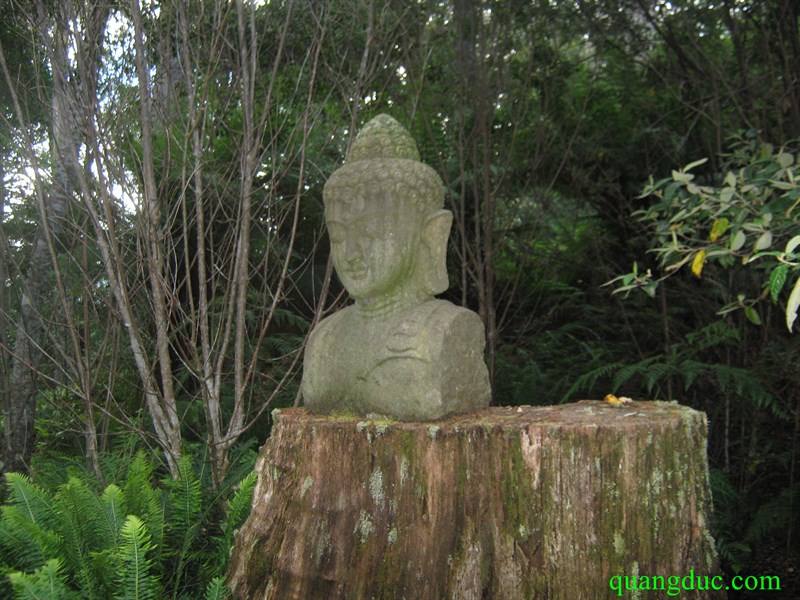
Hermitage of Joyful Living (Thất Tâm Hỷ)

07/04/201507:08(Xem: 4637)
Hermitage of Joyful Living (Thất Tâm Hỷ)

That Tam Hy (1)


Hermitage of Joyful Living (Thất Tâm Hỷ)


Almost five years ago on June 1st 2010, I arrived with my two dogs in Tasmania to start a Ph D in Buddhist philosophy at the University of Tasmania and to continue my training in Clinical Pastoral Education, a form of professional preparation for chaplains and Pastoral/Contemplative Care Workers. On our way south to Hobart my attention was drawn to my right, looking towards the north west of this island state. I felt that I had an appointment with somewhere in that direction and that it would be important for my life.

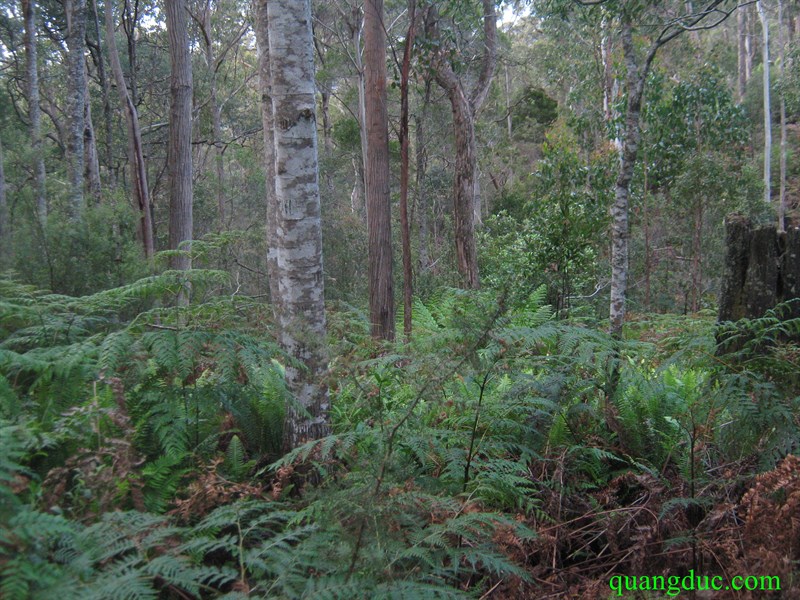
A year later in 2011I went up to Ulverstone to give a talk on Buddhist views on death and dying to a group of hospice volunteers. I knew there was a Buddhist centre on the way and so I organised to break the journey and stay in the Centre. It is in a very ancient valley with lots of trees, many wallabies and paddy melons and birds of many different types. It felt to me as though people who were about to be reborn were just hiding in the gaps of the rocks in the hill sides, waiting. 

I stayed in a beautiful wooden cottage. It rained very softly all night and was deeply quiet. I built a fire in the stove and enjoyed the peace, the sound of rain on the roof and the crackling wood fire. The next morning I was very moved by the physical beauty of the place.

In the following October I went back for a week to enjoy the peace and quiet again. I met a few people in the valley who gathered weekly at the centre for meditation. Two of  these people lived on another property five kilometres away. Over the period of the next year I got to know them both a little better and told them of my hope to find a quiet place where I could stay to write my Ph D. They offered me the opportunity to build a small hut on their property. 

Since then, in 2012, we have developed our initial idea and so this week-end, Easter 2015, we beganthe process of clearing the ground to build the hermitage. It will be a small wooden building of one room for sleeping, cooking, eating, studying and meditating in and there will be a bathroom/laundry and store room attached. My plan is to spend at least three months of the year there for nhập thất  (solitary retreat) during the Buddhist retreat season, Nhập Hạ. The rest of the year the hermitage will be available for other people who want to have long term retreats while I am teaching, visiting my family and hopefully spending time at Trúc Lâm Đà Lạt  and with other monks in the Trúc Lâm school.

Last week two friends, a married couple, visited me. I told them that I was about to start building the hermitage over Easter and that I had saved $6,000 dollars from Dana offerings that Vietnamese people in Adelaide and Melbourne had given me towards building it. Included in this is $2,000 given to me by one of my cousins in Adelaide. The husband said “We’ll give you the money to build the floor” which of course is the first thing that gets built. I am really touched by the confidence and value that all of these people have placed in this project. I hope to have it finished and liveable by the end of 2016 so that in 2017, when I go onto the aged pension, I can spend perhaps a year there practising meditation.

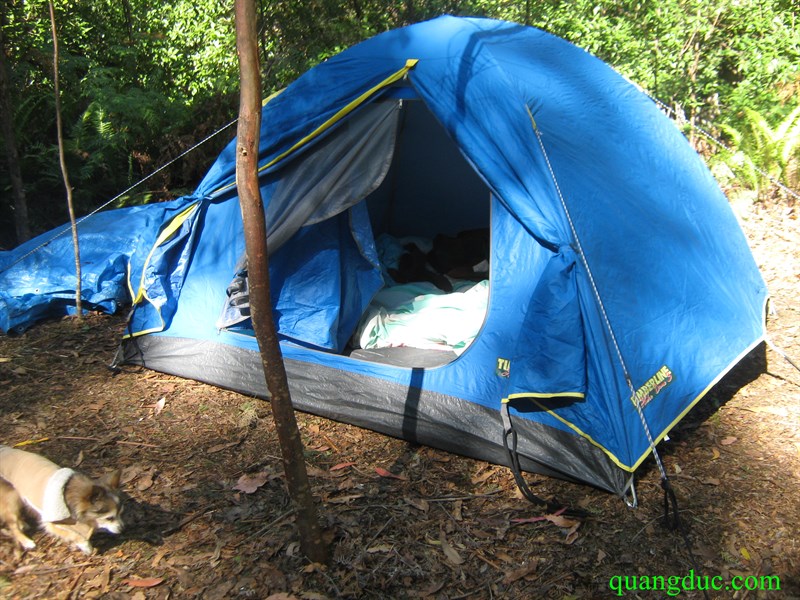
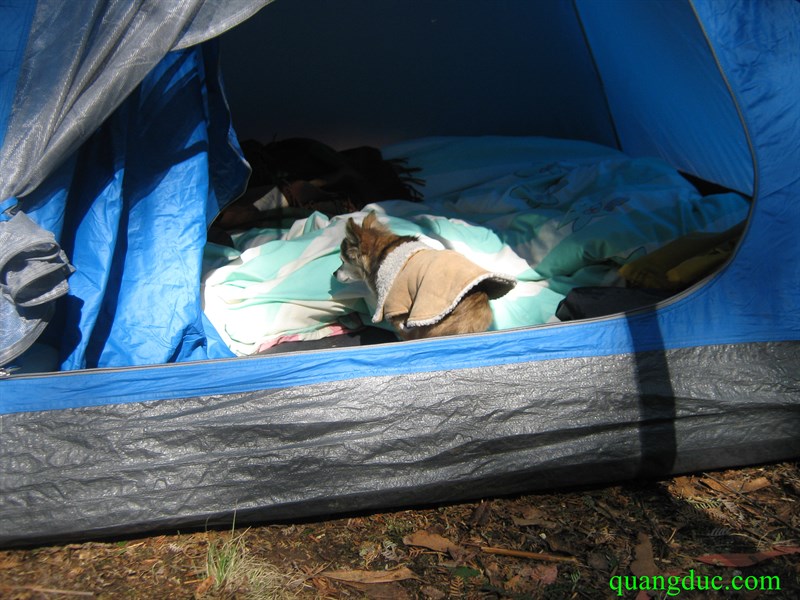
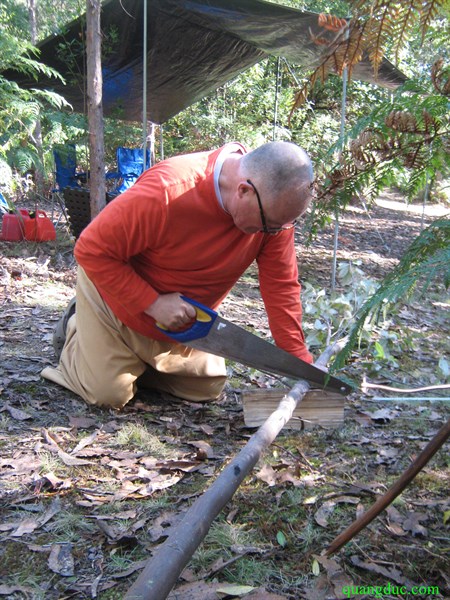
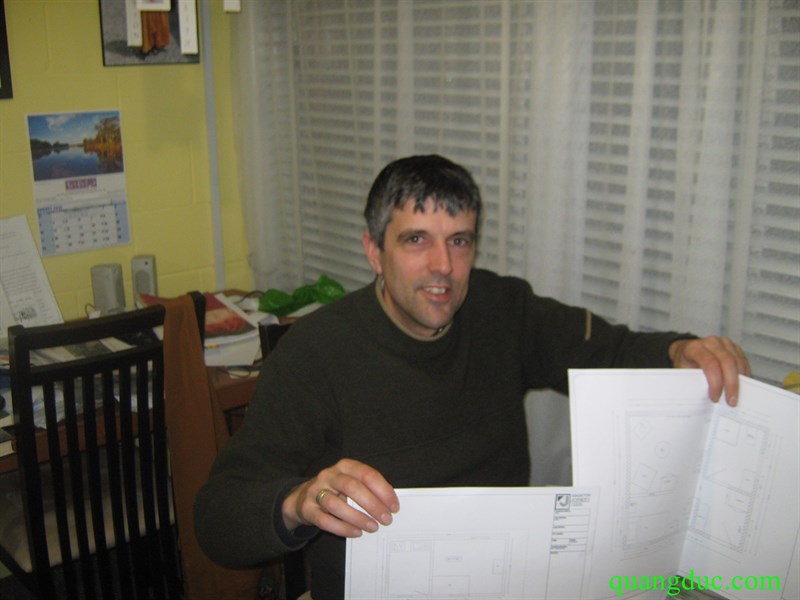
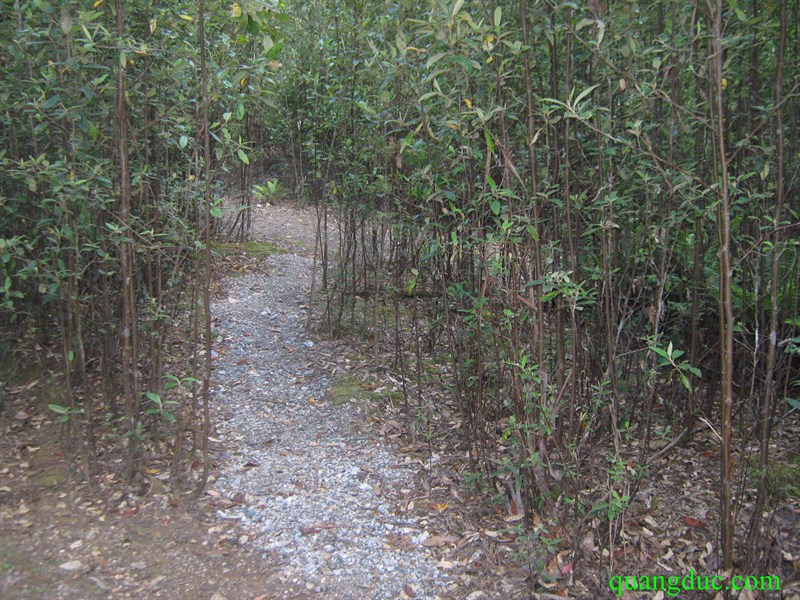
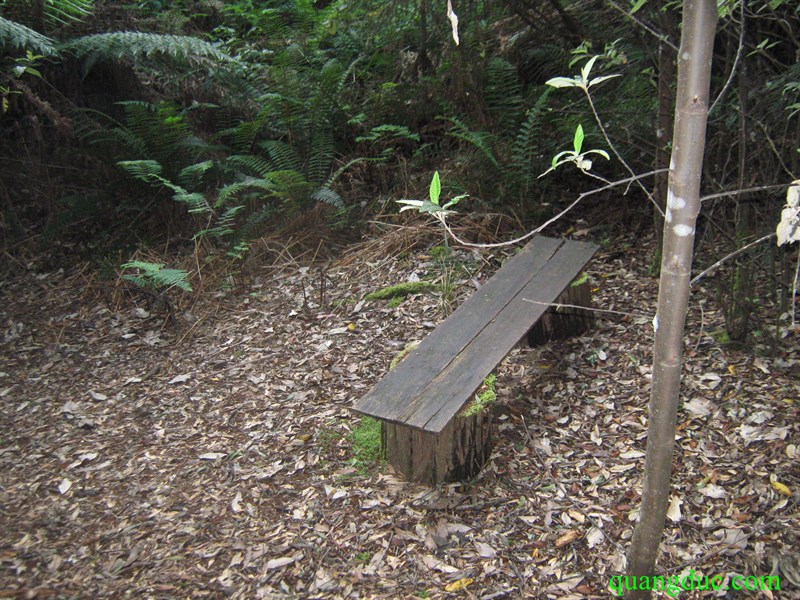
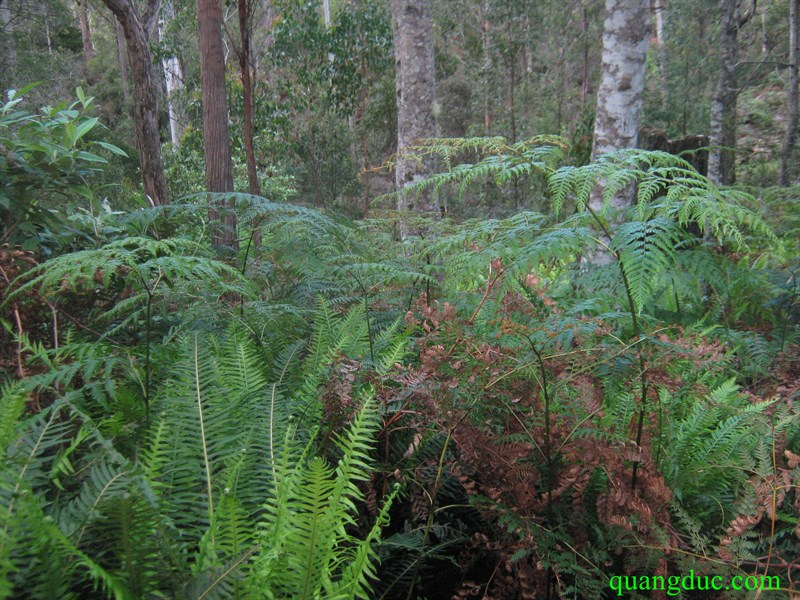
The hermitage will be called Thất Tâm Hỷ or Hermitage of Joyful Living. Tâm Hỷ was the Dharma name I gave to  a very lovely lady who lived here in Hobart. She had breast cancer and she asked me if I would visit her and care for her spiritually. I did so over three years. She and her husband took the Three Refuges and Five Precepts with me at the end of 2012 and last June I conducted her funeral. This lady was a very joyful person even during the most difficult times of her illness and she was greatly loved by many people here in Hobart.  Her husband is a joiner and I will be helping him as we build our Thất. Here are some photos I have taken of our progress so far. We have this weekend laid out the hermitage and tested the soil to determine the kind of foundation we will need.

Best wishes
Thích Trúc Thông Pháp.
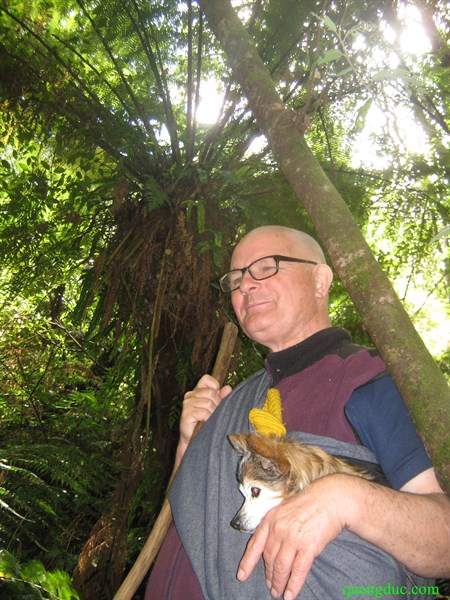

That Tam Hy (1)That Tam Hy (10)That Tam Hy (11)That Tam Hy (12)That Tam Hy (13)That Tam Hy (2)That Tam Hy (3)That Tam Hy (4)That Tam Hy (5)That Tam Hy (6)That Tam Hy (7)That Tam Hy (8)That Tam Hy (9)
Ý kiến bạn đọc
09/04/201506:39
Khách
Happy to hear your good news.
Gửi ý kiến của bạn
Tắt
Telex
VNI
Tên của bạn
Email của bạn
27/10/2014(Xem: 9192)
There is a new era of technological innovation sweeping the world, which is now coming of age the Internet's World Wide Web, a powerful communications system and learning environment. The use of the Internet should not be seen as just a new way to disseminate or repackage the Buddha's teachings but potentially as a base for an innovative online Dharma Community that offers alternative social and spiritual values. The World Wide Web provides the Sangha with a unique resource with which to teach and communicate the Dharma. A student can access information, teachings, Suttas, educational resources, and potentially online teachers and monks, from anywhere in the world (with access to a device connected to the internet), anytime of day or night, free of charge, with content personally selected and instantly delivered. This ability for Buddhist organisations to publish information and educational programs relatively cheaply, and then make it available to the end user free of charge, is in li
14/08/2014(Xem: 4281)
Dear Family and Friends I am sending to you as an attachment the Winter newsletter of Buddhist Contemplative Care Tasmania (BCCT). I am doing this by way letting you know of one of the projects that form my life here in Tasmania. BCCT had its beginnings in my little studio apartment in West Hobart late in 2011. After much nurturing, it is growing into something of a movement with a number of very committed members here and the hope of building an organisation potentially called Buddhist Contemplative Care Australia with chapters in Adelaide and Victoria. It involves a lot of work on the part of a few people. In a sense it is like a small business in which all of us are on the look out, at least in an unconscious way, for opportunities to give expression to our purpose which is to support the growth of Buddhist Contemplative Care (sometimes called Pastoral Care) in Tasmania and throughout the rest of Australia. I hope you can rejoice with me in this work done here, Best
26/05/2014(Xem: 5267)
Newly elected Prime Minister will promote India’s rich Buddhist heritage to attract tourists and scholars and enhance India’s standing in the world New Delhi, India -- The world’s first Global Buddhist missionary Anagarika Dharmapala and the most talked about man in India today and perhaps in the entire policy and decision making world the Prime Minister designate of India the iconic Narendra Modi, share something in common with each other.
19/04/2014(Xem: 29191)
Buddhism spans cultural groups such as Chinese, Taiwanese, Malaysian, Indonesian, Cambodian, Vietnamese, Loation, Thai, Mongolian, Tibetan, Burmese, Korean, Japanese, Indian, Sri Lankan, to name but a few. Buddhism has a strong history in Victoria since the goldrush days in 1848 and continues today with unique representation of many cultural groups and traditions and forms practiced in Melbourne and around the state. The 2014 Vesak Observance will be presented with a balance of Commemoration and Celebration. We are honored again to have the support of the City of Melbourne and the Victorian Multicultural Commission, as well as the Victorian Buddhist Community.
16/04/2014(Xem: 15454)
The book gives a short account of Buddhism in the last 2500 years. The foreword for the book was written by Dr. Radhakrishnan, world renowned philosopher. The book contains 16 chapters and about one hundred articles written by eminent Buddhist scholars from India, China, Japan, Sri Lanka, Nepal. Buddhism is a way of life of purity in thinking speaking and acting. This book gives an account of Buddhism not only in India but also in other countries of the East. Detailed and insightful glimpse into the different schools and sects of Buddhism find a place in this book. Buddhist ideas on education and the prevailing state of Buddhism as revealed by their Chinese pilgrims who visited India during that times are other components of the book. Chapters on Buddhist art in India and abroad and places of Buddhist interest are also included to give it a holistic perspective. The spirit of Buddha comes alive in the book and enlightens the readers with his teaching so essential now for peac
11/03/2014(Xem: 4263)
Soon after Buddha's death or parinirvana, five hundred monks met at the first council at Rajagrha, under the leadership of Kashyapa. Upali recited the monastic code (Vinaya) as he remembered it. Ananda, Buddha's cousin, friend, and favorite disciple -- and a man of prodigious memory! -- recited Buddha's lessons (the Sutras).
16/05/2012(Xem: 13018)
In an age of heightened tensions in Australia and around the world, the message of Buddhism has never been more necessary to bring peace to communities and spiritual refuge to individuals. The challenge is how to elucidate that message so that it speaks clearly in diverse voices to different people with disparate needs and to communicate it so that it cuts through an ever-increasing information clutter. As with other organisations, religious bodies are
22/07/2011(Xem: 4010)
V. G. Nair, Buddhist-Mission-Visits-America-Before-Columbus-1979
18/07/2011(Xem: 6469)
Buddhism in America Before Columbus, Hui Shen was a Buddhist monk and missionary who lived during the latter half of the 5th Century AD to the early part of the 6th Century. From all indications he was born somewhere within the landlocked area adjacent to China which now days would be considered Afghanistan. Although not much is known of his early years it is known that he dedicated his life to Buddhism and spreading the word of Buddhism far and wide --- most notedly to America, known as Fu Sang in Chinese.
29/10/2010(Xem: 9519)
Like the youngteenagers who delight in doing things differently from their parents, new Buddhists innon-Asian countries seem to be going through their own proud adolescence by challengingthe boundaries of traditional Buddhism. Fortunately, for both our youngsters and WesternBuddhists, the arrogance of youth soon gives way to the mature, long years ofunderstanding and respect for tradition. It is in order to hasten this growing up ofBuddhism in Australia that I write this article on the meaning of 'Sangha' as it was meantto be understood by the Lord Buddha.