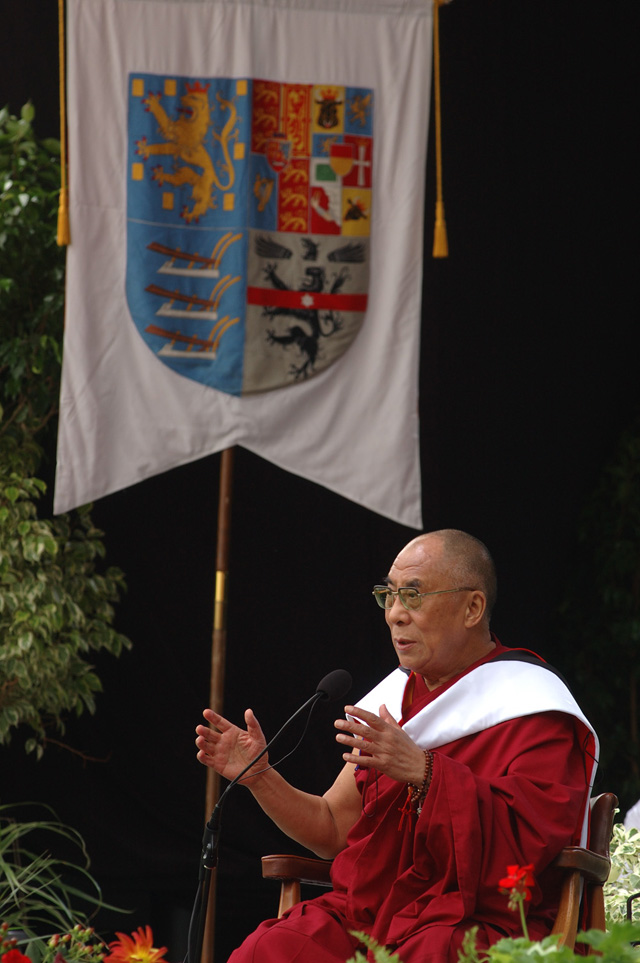
Australian Sangha Association Statement Regarding Protests at the Teachings of H.H. the Dalai Lama

9/19/201003:44(View: 6649)
Australian Sangha Association Statement Regarding Protests at the Teachings of H.H. the Dalai Lama
5dalailama

Australian Sangha Association Statement
Regarding Protests at the Teachings of H.H. the Dalai Lama

This is the official ASA statement about the demonstrations in Sydney and an excerpt from a letter about NKT ordination sent to the Australian Buddhist Councils and the World Buddhist Sangha Council:

»Australian Sangha Association statement regarding protests at the teachings of HH the Dalai Lama

The ASA wishes to express its dismay at the conduct of robed members of the New Kadampa Tradition, Western Shugden Society and associated organizations during the teachings given by HH the Dalai Lama on 11-15 June 2008 at Olympic Stadium, Sydney, Australia.

The Dalai Lama's teachings were attended by over 6000 people who came to be inspired by the peaceful and harmonious message of Buddhism. Instead they were met by a large, organized group of protesters dressed in monastic robes shouting slogans. Noisy public demonstrations such as these are not appropriate behaviour for monks or nuns and have brought Buddhism in this country into disrepute.

The ASA recognizes there is a difference of opinion with the Dalai Lama on various issues. It is the right of NKT and WSS members to disagree with the Dalai Lama's opinions but their disagreement should be expressed in a peaceful, respectful and reasonable manner.

Therefore, in the spirit of Dharma and in accordance with Buddhist principles the ASA would encourage the NKT and WSS protesters to request forgiveness from the Dalai Lama for their behaviour and in future to conduct themselves with humility and restraint.«

And from the letter …

»According to our information the robed members of this group have not taken monastic vows as defined by the Vinaya which, as I am sure you know, is the collection of teachings by the Buddha that articulate the moral discipline to be followed by the ordained community.

The Sangha is a 2500 year old institution which has always kept the Vinaya rules as its core practice. It is this moral code which is the foundation of Buddhist monasticism and adherence to it is what defines a person as a Buddhist monk or nun. It is the most important thing that we as monastics from different traditions have in common and is what enables us to come together under the auspices of the WBSC and ASA to celebrate our shared commitment to the Three Jewels.

Members of the NKT who wear robes do not follow this tradition. They have taken 5 precepts including a vow of celibacy and make 5 additional promises to behave in a manner consistent with Dharma and spiritual practice. This is indeed an admirable and praiseworthy commitment and we do not wish to imply that such practitioners are anything other than sincere and genuine in their devotion to the path. However it must be emphasised that this is not a monastic ordination according to the teachings of Buddha.

These precepts are said by their teacher Kelsang Gyatso to derive from the Perfection of Wisdom Sutra and he clearly states they are different from those found in the Vinaya. According to him a monk or a nun becomes a Bhikhu or Bhikhuni 'merely by holding these ten vows of ordination and developing a strong realisation of renunciation that is ever present in the mind.'

This definition has nothing in common with the traditionally accepted understanding of ordination and confuses the notion of a Bhikhu or Bhikhuni in the spiritual and conventional sense. From earliest times a 'true Bhikhu' has been one who realised the Dharma. However all Buddhist traditions, while fully understanding this, have always insisted on the necessity for the conventional Sangha to hold Vinaya vows properly received in accordance with the prescribed rituals.

The opinion of the ASA is that for NKT members to represent themselves to the public as authentic Buddhist monks and nuns is wrong and misleading.

One of the principal aims of the ASA is to help ensure the integrity and good reputation of Buddhism in general and the Sangha community in particular. We ourselves are not sure how to respond to this challenge but have decided to share our concerns with you. If you have some suggestions we would welcome your input. For now we feel that bringing this issue to the attention of the public is the best thing we can do.«


21 July 2008
Australian Sangha Association


See also:

Statement of the Deutsche Buddhistische Ordensgemeinschaft (DBO, German Buddhist Monastic Association) on the Protests against the Dalai Lama by the International Shugden Community (ISC)


Send comment
Off
Telex
VNI
Your Name
Your email address
8/1/2025(View: 3359)
Invitation for Ullambana Day 2025 (Buddhist Remembrance of Our Parents’ Day) Nam Mo Sakya Muni Buddha Dear brothers & sisters, The Buddhist Ullambana Day Ceremony is a Celebration in Remembrance of our parents' great efforts, on our behalf, throughout our lives. The tree draws its strength growing from the earth, drawing water and nutrition from the ground as its sustenance. Nobody came to this world without their parents who devoted their lives towards our growth to maturity. Their love and labor can not be expressed adequately through common language and simple gifts. We wish to invite you and your family to participate in this Ceremony to be held at the Quang Duc Monastery, 105 Lynch Road, Fawkner, 3060. It will commence at: *Sunday, August 17, 2025 : Prayers for the Dead & start chanting The Ullambana Sutra (concerning filial piety) at 10:30am. Then at 7:00pm every night, chanting sutras, reading names, The prayer for peace and salvation of souls until the 15th day of th
6/14/2025(View: 4884)
Sitagu Sayadawgyi’s Golden Speeches about the International Conference & Messages Towards World Peace
5/3/2025(View: 3925)
In Buddhism, Mindfulness and Compassion are two powerful practices, they are closely linked and work together to form personal growth and improve emotional health. Both come not only from deep-rooted traditions of personal growth and healing, but also are widely applicable in modern psychology and education in daily life. This is the moral and spiritual topic that we aim at because of their mutual relationship.
1/1/2025(View: 7633)
I myself have not been lucky to meet The Elder Master but have got your blessings and learned a lot from your books. During the Google Meet Online Class for Overseas Vietnamese Buddhist Family Level 1 on Sunday 13/12/2020, I mentioned one thing which everyone agreed with, that is all Vietnamese monks/nuns and lay practitioners from the 50s have directly or indirectly received the training of The Elder Master of the Plum Village. “Teacher’s nurture has the seed of wisdom grown, His merits enlightens the noble way”.
5/7/2024(View: 10032)
Join us for this 7 day transformational retreat on Serenity island in Fiji with Dr Martin Nguyen TCM 27th May to 2nd June 2024 This Discover Serenity retreat integrates: Body Pulsing Negative Energy Release, Freedom Meditation, Serenity Qi Gong, Kava Ceremony, Transformational Workshops & Group activities, Beach Walks, Sunrise Meditation & Night Star gazing. Fijian Culture and Nature Immersion Inclusions: 6 Nights accomodation in beach front bure with ensuite &AC Organic herbal tea & bottled water Daily detox break fast, Fijian lunch & dinner Serenity island activities: snorkelling, kayaking, fish feeding tour, basket weaving & baby turtle care. 90 min Fijian full body massage x 1 2 hrs Island hopping & snorkelling tour x 1 (optional) 2 hrs Sand bar reef snorkelling tour x 1 (optional) 1 hr Traditional Fijian cooking class x 1 Body Pulsing Negative Energy Release, Freedom Meditation, Serenity Qi Gong, Kava Ceremony, Transformational Workshops & Group activities,
5/2/2024(View: 5735)
Chan Xin International Buddhist Magagizine - 禅心” 國際佛教雜誌 - 02
10/14/2023(View: 15498)
Our immense pleasure is to present to you this remarkable conference book – Buddhism: A Historical and Practical Vision. Inside these pages lies a stunning tapestry of wisdom created by the joint dedication and hard work of young Vietnamese Buddhist monks and nuns scholars who have explored the legacy of Buddhism in depth. From exploring the compatibility and integration of Mahāyāna Buddhism’s teachings with realistic political theory on leadership and the introduction Buddhist philosophy and the establishment and significance of Buddhist universities in the United States, each paper stands as a testament to the vibrant diversity and enduring relevance of Buddhist thought. Among the thought-provoking papers, you will discover insightful investigations into the practical theory of impermanence as a means to enhance one’s own living experience. Additionally, a critical interpretation of Nibbāna from Dr. Ambedkar’s perspective in the Indian Engaged Buddhist Movement sheds light
7/25/2023(View: 17199)
Dealing with the chosen work, I observe that a puggala has been present in the world because of dependent origination (paṭiccasamuppāda) or continuity of change (santāna). The five masses of elements (pañcakkhandhā), which constitute the puggala and the world around him, are without any substance (anattā), impermanent (anicca) and they are really causes of grief (dukkha)...