Kalachakra 2017 Preliminary Teachings in Bodhgaya

04/01/201708:41(Xem: 16665)
Kalachakra 2017 Preliminary Teachings in Bodhgaya

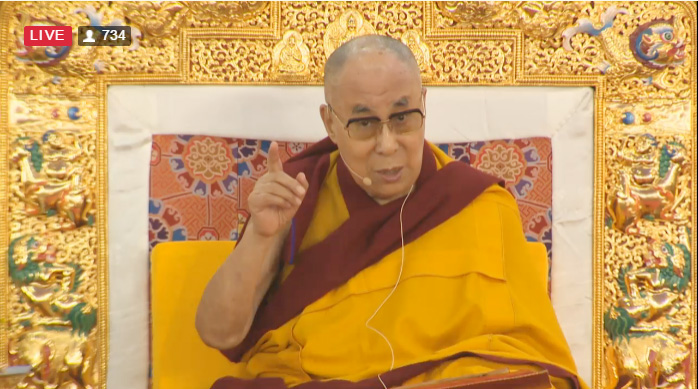
Đức Đạt Lai Lạt Ma truyền quán đỉnh lần thứ 34 tại Bodh Gaya


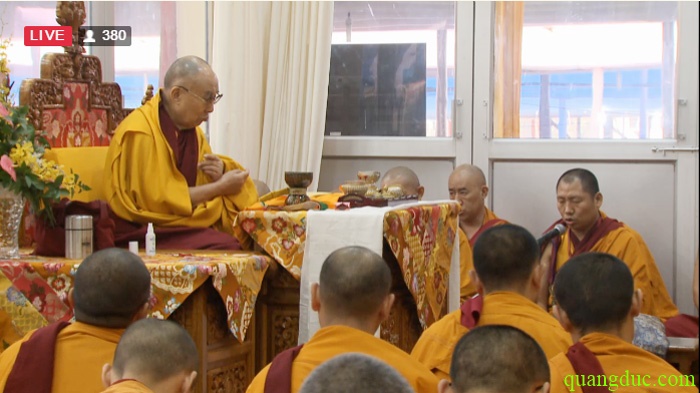
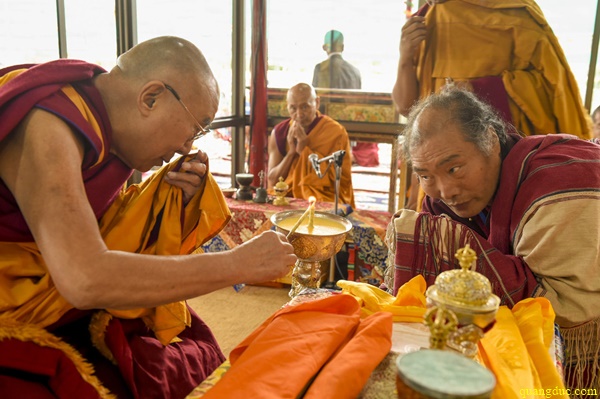
Bắt đầu vào nghi thức, Thủ tướng Chính phủ Tây Tạng lưu vong (Sikyong), Tiến sĩ Luật Lobsang Sangay bắt đầu dâng hương, dâng bánh cúng, dâng Mạn đà la... theo truyền thống Phật giáo Tây Tạng.

blank
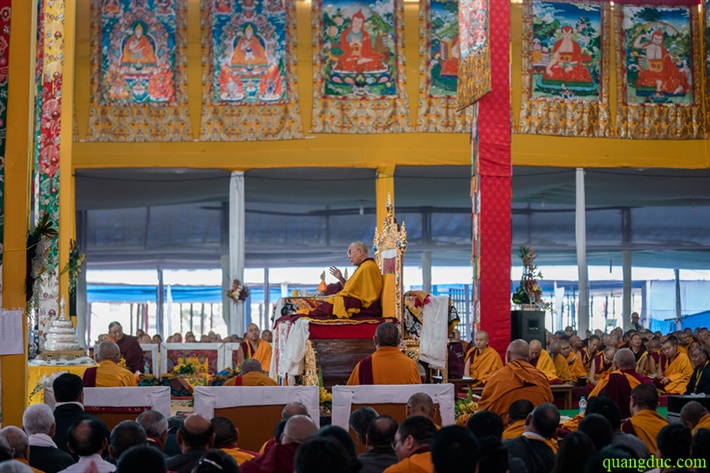
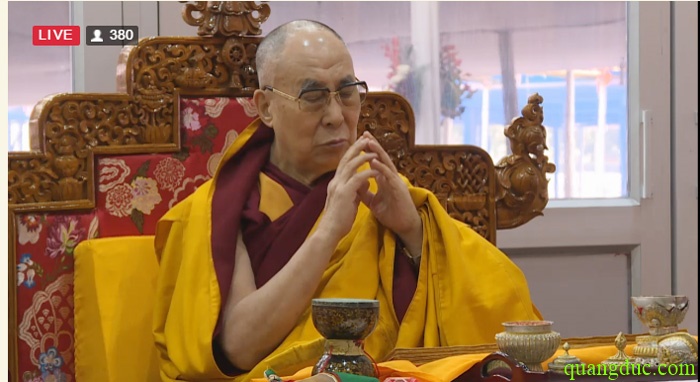
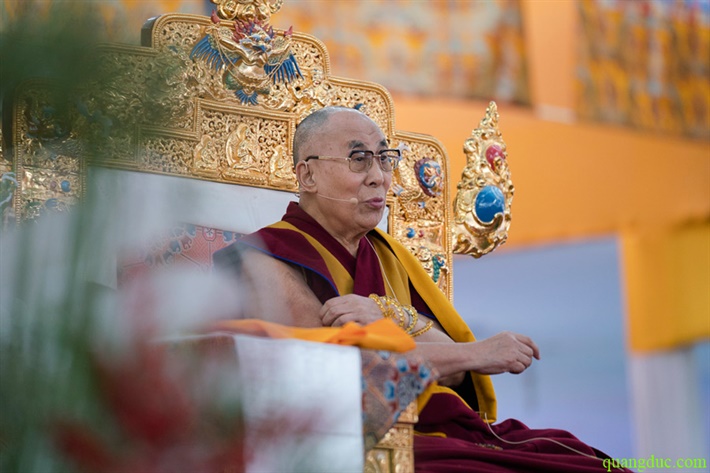
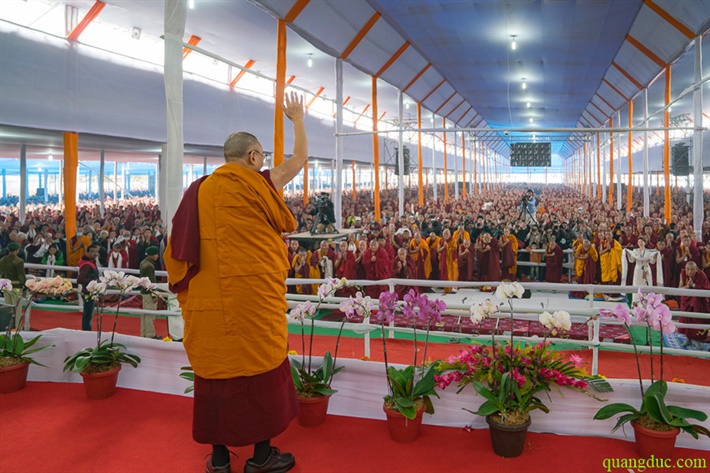
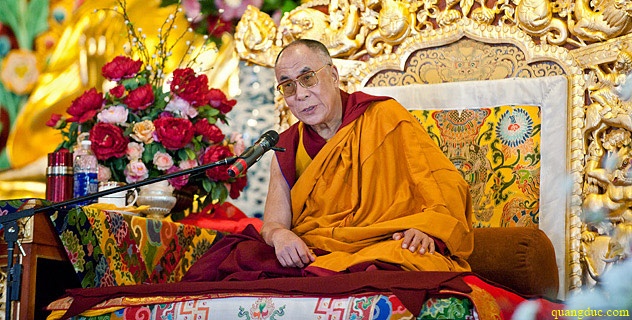
Đức Đạt Lai Lạt Ma Chủ trì Pháp hội Thời luân Kim cương (Kalachakra), ngày 11/01/2017.
Trong khi giới thiệu Pháp hội Thời luân Kim cương (Kalachakra), truyền quán đỉnh Thời luân Kim cương lần thứ 34 cho Phật giáo đồ, đức Đạt Lai Lạt Ma gợi nhớ đến những người ở quốc nội Tây Tạng và hàng nghìn người Trung Quốc tại quê hương họ không thể tham dự Pháp hội, vì một hạn chế đi lại bởi sự áp lực của Chính quyền Trung Quốc. 

Ngài nói: “Có những người ở Trung Quốc và quốc nội Tây Tạng, họ gặp khó khăn khi đến đây. Vì vậy tôi đã chia sẻ với họ rằng nếu họ có thể giữ tâm sùng kính và đạo tâm kiên cố đối với những giáo huấn Kalachakra cho hôm nay và tương lai, họ có thể nhận được khởi đầu thông qua sức mạnh của niềm tự tin và ý chí nghị lực của họ”.
Ngài nói rằng trong khi cung cấp những lời cầu nguyện để xua tan bất kỳ trở ngại mà họ có thể phải đối mặt trong việc khởi đầu: “Như đã đề cập trong Luật tạng, đã có một lễ trao bằng cách của các chữ cái. Vì vậy, tương tự với các công cụ truyền thông hiện đại, những người Tây Tạng và Trung Quốc, nơi quê hương họ có bắt đầu thể hình dung và nhận tín hiệu. Như chúng ta đã đi qua những lời giáo huấn ở đây, nếu có thể phù hợp, suy nghĩ và làm theo sự hướng dẫn của tôi, sau đó họ sẽ bắt đầu nhận được từ ngày hôm nay trở đi”.
Chính trong khi bắt đầu, Ngài hướng dẫn các môn đệ nắm bắt được bản chất của giáo lý Mật tông Kalachakra (Kim Cang Thừa): “Chúng ta đã đi qua các giáo huấn sâu sắc và rộng lớn của Phật, mà đã được làm sáng tỏ bởi bậc đại sư vĩ đại như Ngài Long Thọ và các thánh đệ tử của Ngài. Bản chất của những lời giáo huấn này nhằm đi thẳng vào bồ đề tâm và trí tuệ của tính không. Nó không chỉ là về hưởng số phúc lành, nhưng vì chúng ta có tiềm năng để đạt tứ trí của Phật và những tiềm năng được thể hiện nhiều hơn nữa bên trong của chúng ta. Vì vậy, để thêm sinh lực tiềm năng này, chúng ta đang dùng các quán đỉnh”.
Giáo lý Mật tông Kalachakra (Kim Cang Thừa) được thiết lập của việc thực hành và lý thuyết Phật giáo Mật thừa gồm triết học, hướng dẫn thiền định, vũ trụ học, y học, và yoga. Mật tông Kalachakra là một trong một số hệ thống giảng dạy khác nhau trong Phật giáo Mật tông ở Tây Tạng, tất cả đều có nguồn gốc từ Ấn Độ. 
blank
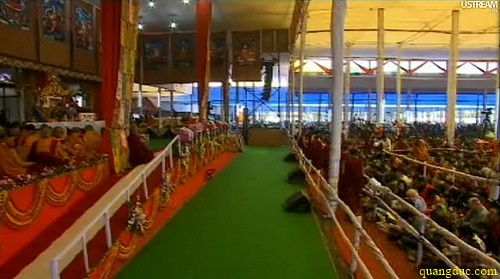
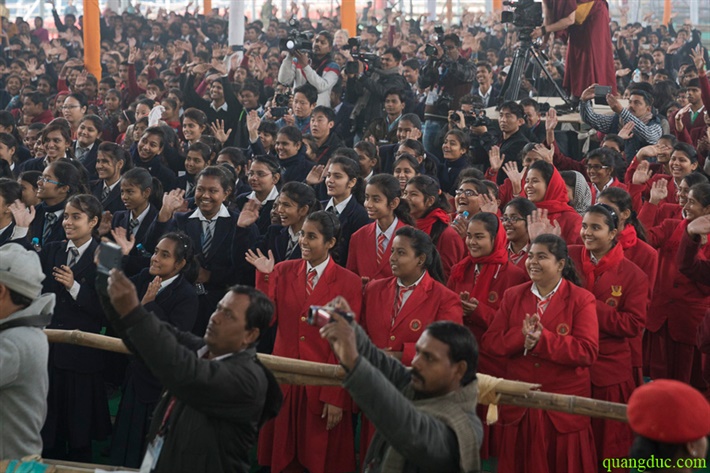
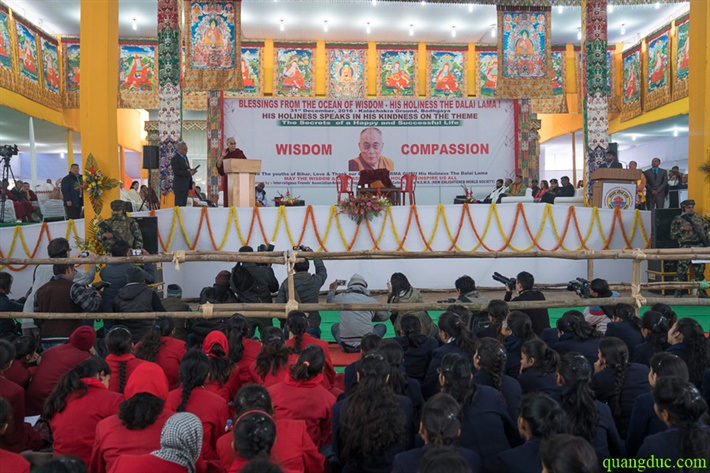
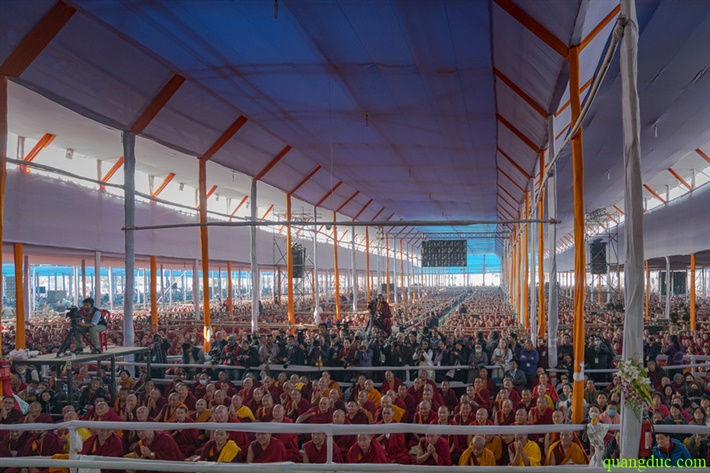
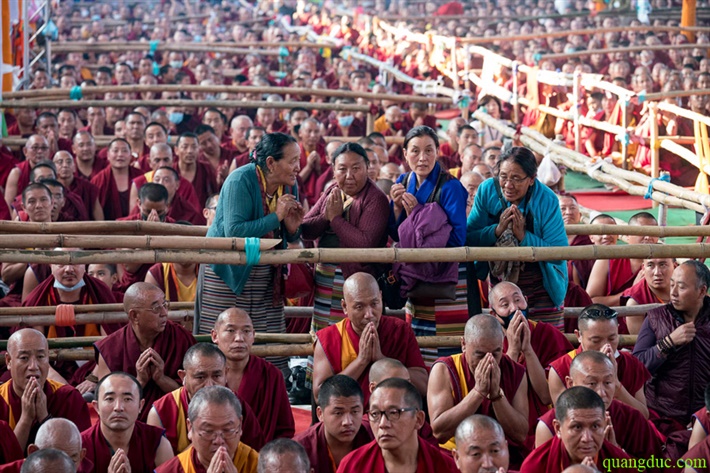
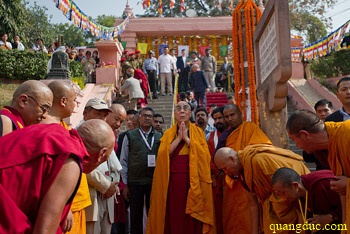
Hàng vạn Chư tăng sĩ và Phật giáo đồ tham dự Pháp hội Thời luân Kim cương (Kalachakra)
Phật giáo Mật tông, còn được gọi là Kim Cương thừa, là dòng chính của Phật giáo ở nước Tây Tạng, Bhutan và Mông Cổ (trong khi đó, nói chung, Phật giáo Nguyên Thủy chủ yếu ở Sri Lanka, Campuchia, Thái Lan, và Miến Điện và ở Việt Nam thì đang phát triển mạnh, Phật giáo Bắc tông thì phổ biến ở Trung Quốc, Việt Nam, Nhật Bản và Hàn Quốc). 

Mật trú được dựa trên nguyên tắc việc chuyển đổi tâm thức bất tịnh trở nên tâm thức thuần tịnh tinh khiết. Sử dụng trực quan của các vị Bồ tát và mandalas (ở đây mandala nhiều hơn), những âm tiết thiêng liêng được gọi là thần chú, và thiền định mang về một tâm thức thuần túy như vậy. Người ta tin rằng thông qua tu tập như vậy, triển vọng bình thường của một người có thể được về cơ bản chuyển đổi thành một tâm thức thiêng liêng, nơi mà tất cả các điểm nhận thức, âm thanh và thậm chí cả suy nghĩ, có kinh nghiệm hoàn toàn trong bản chất thật sự của họ.
Điểm cuối cùng để các phương pháp khéo léo được tìm thấy trong Mật trú là để biến đổi tâm và trí tuệ và lòng từ bi bẩm sinh của một người trưởng thành. Đức Đạt Lai Lạt Ma đã nói, "Phật giáo không phải là nghi lễ, thần chú, quán tưởng, hay nghi lễ. Những điều đó có thể là một phần của Phật giáo, nhưng điểm căn bản của Phật giáo là để chuyển đổi tâm trí".
Ngài khuyên các Phật giáo đồ để phản ảnh trên các nguyên tắc Bồ đề tâm và trí tuệ của của tính không trong suốt thời gian chia sẻ pháp thoại. Ngài nói rằng sự kết hợp của trí tuệ và hành động từ bi là không thể thiếu trong mỗi phật tử chúng ta để đạt được sự chứng ngộ cao hơn, thêm vào đó mỗi cá nhân với trí thông minh có khả năng có lòng vị tha.
blank
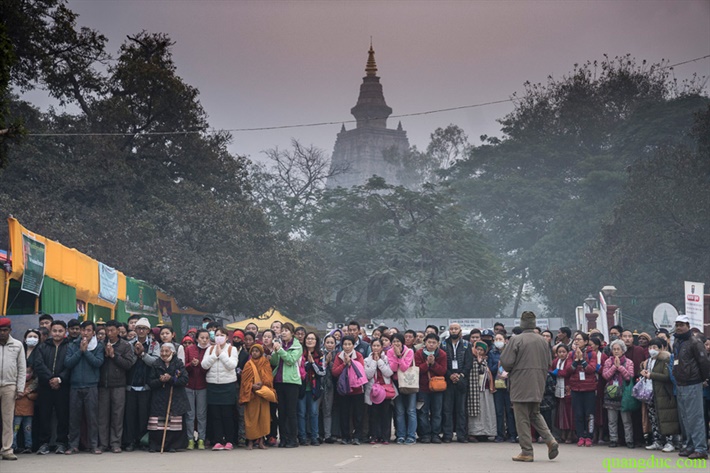
Phật giáo đồ kiên nhẫn chờ đợi để xem các thiết kế Mạn đà la thiêng liêng, Pháp hội Thời luân Kim cương (Kalachakra)
Mong muốn thoát khỏi vòng luân hồi là yêu cầu quan trọng nhất đối với một phật tử nhận giáo lý Mật tông Kalachakra (Kim Cang Thừa). với những Yoga Tantra ở mức cao cấp nhất. Trong Yoga Tantra cao cấp nhất, việc thực hành cần hợp nhất ba thân Phật, Pháp thân, Báo thân và Hóa thân trên con đường thực hành thông qua các tiến trình chết, giai đoạn trung gian và tái sinh. Trong khi các kinh điển hiển giáo dạy về việc cần phải mất ba A tăng kỳ kiếp hoặc nhiều hơn nữa mới có thể chứng đạt Phật quả thì kinh điển Mật giáo dạy rằng có thể chứng đạt tới quả vị Phật trong một đời trong một thân người. 

Ngài nói: “Để khởi việc trao Yoga Tantra cao nhất, như tôi đã giải thích nếu quý vị không có mong muốn được giải thoát khỏi chu kỳ của sự tồn tại của nó là khó khăn để trở thành vị tăng sĩ Phật giáo. Với sự hiểu biết về sự vô thường và sự giác ngộ, quý vị nên xác định những cảm xúc tiêu cực và có mong muốn vượt qua chúng. Quan trọng nhất, vun trồng đại nguyện giải thoát tất cả chúng sinh trên không gian từ đau khổ”.
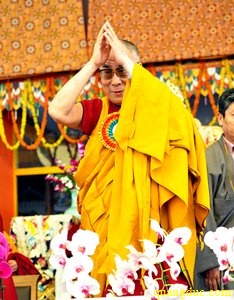
Vân Tuyền (Nguồn: VP Chính phủ Tây Tạng lưu vong)


 Dalai Lama Kalachakra_2017 (2)

Dalailama_2017
Live Webcasts:

Kalachakra from Bodhgaya

His Holiness the Dalai Lama will grant the Kalachakra Empowerment from January 2-14, 2016 from Bodhgaya, Bihar, India. His Holiness will speak in Tibetan with English, Chinese, Vietnamese, Korean, Hindi, Russian and Mongolian translations available.

The English, Chinese and Tibetan channels will carry all of the consecration prayers, ritual dances and sand mandala construction along with the preliminary teachings and Kalachakra Empowerment. The other language channels will only cover the teachings, ritual dances, Kalachakra Empowerment and Long Life Empowerment and Offerings.


All times Indian Standard Time (IST=GMT+5.30)

English language live webcasts can be viewed here.
Chinese language live webcasts can be viewed here.
Tibetan language live webcasts can be viewed here.
Vietnamese language live webcasts can be viewed here.
Hindi language live webcasts can be viewed here.
Korean language live webcasts can be viewed here.
Russian language live webcasts can be viewed here.
Mongolian language live webcasts can be viewed here.

January 2nd
7:00am - 10:00am Prayers
10:00am - 11:00am Teachings for Disciples
12:30pm - 2:00pm Prayers

January 3rd
7:00am - 11:30am Prayers
12:30pm - 2:00pm Earth Ritual Dance
2:00pm - 4:00pm Prayers

January 4th
7:00am - 11:00am Prayers
12:30pm - 3:00pm Prayers

January 5th-8th: Teachings -  His Holiness will give teachings on Shantideva's "A Guide to the Bodhisattva's Way of Life" and Kamalashila's "Middling Stages of Meditation"

January 5th
8:45am - 10:45am Prayers
12:30pm - 3:00pm Teaching

January 6th
8:45am - 10:45am Prayers
12:30pm - 3:00pm Teaching

January 7th
8:45am - 10:45am Prayers
12:30pm - 3:00pm Teaching

January 8th
8:45am - 10:45am Prayers
12:30pm - 3:00pm Teaching

January 9th
7:00am - 11:30am Prayers
1:00pm - 2:00pm Ritual Offering Dance
2:00pm - 3:00pm Prayers

January 10th
7:00am - 11:00am Self Generation
12:00pm - 3:45pm Preliminary Empowerment for Students

January 11th
7:00am - 11:30am Self Generation
12:30pm - 4:00pm Kalachakra Empowerment

January 12th
7:00am - 11:00am Self Generation
12:00pm - 4:00pm Kalachakra Empowerment

January 13th
7:00am - 11:30am Self Generation
12:30pm - 4:30pm Kalachakra Empowerment

January 14th
7:30am - 8:30am Self Generation
8:30am - 11:30am Avalokiteshvara Permission and Long Life Offering

For times in your area 10:00am IST on January 2nd in Bodhgaya, India is the same as 8:30pm PST on January 1st in Los Angeles, California, USA and 5:30am GMT on January 2nd in London, United Kingdom. Other times can be found using Time Zone Converter (http://www.timeanddate.com/worldclock/converter.html).
Dalai Lama Kalachakra_2017 (3)Dalai Lama Kalachakra_2017 (4)Dalai Lama Kalachakra_2017 (5)Dalai Lama Kalachakra_2017 (6)Dalai Lama Kalachakra_2017 (8)Dalai Lama Kalachakra_2017 (9)Dalai_lama_Kalachakra_2017 (60)Dalai_lama_Kalachakra_2017 (1)Dalai_lama_Kalachakra_2017 (2)Dalai_lama_Kalachakra_2017 (3)Dalai_lama_Kalachakra_2017 (10)Dalai_lama_Kalachakra_2017 (11)Dalai_lama_Kalachakra_2017 (22)Dalai_lama_Kalachakra_2017 (23)Dalai_lama_Kalachakra_2017 (26)Dalai_lama_Kalachakra_2017 (33)


Gửi ý kiến của bạn
Tắt
Telex
VNI
Tên của bạn
Email của bạn
14/05/2015(Xem: 29330)
Amitabha Buddha’s name chanting is an easy method of cultivation in which beliefs are difficult to have, especially in this age of information technology when people care more about material comfort than the spiritual life. However, as in the Buddha’s teachings: Buddhahood is a nature of mind and it’s the mind that possesses the Buddhahood, ringing about enlightenment. Therefore, as Buddhists, we have to believe in Buddha’s teachings. The Flower Adornment Sutra stated: “Beliefs are the mother of all the good merits.”. No other merits are greater than making a vow to be reborn in the Pure Land and to become a Buddha. On the occasion of this year’s retreat, we would like to briefly tell you about an old lady having a belief in Amitabha Buddha’s name chanting
21/11/2014(Xem: 27178)
As a Vietnamese Buddhist monk serving as a Buddhist chaplain in several hospitals across Melbourne, as well as at the Melbourne Assessment Prison, I have witnessed numerous personal tragedies experienced by the living, along with the profound realities of dying and death. Many individuals, especially those approaching the end of life, often face their final moments with fear, suffering, and deep emotional pain. Bearing these experiences in mind, I would like to share some reflections from a Buddhist perspective. It is my sincere hope that such understanding may help ease the fear surrounding death and allow individuals to approach this inevitable transition with greater calmness and acceptance. For, according to the Buddhist view, death is not the end of life, but rather a continuation within the cycle of existence.
17/04/2014(Xem: 17415)
Sampson "Sam" Gordon Berns (October 23, 1996 – January 10, 2014) was an American who suffered from progeria and helped raise awareness about the disease.He was the subject of the HBO documentary Life According to Sam.[1][3] His parents, Scott Berns and Leslie Gordon, both pediatricians, received their son's diagnosis when he was less than two years of age.[4] Roughly a year later, they established the Progeria Research Foundation[5] in an effort to increase awareness of the condition, to promote research into the underlying causes of and possible treatments for the disease, and to offer resources for the support of sufferers and their families.Sam Berns is a Junior at Foxboro High School in Foxboro, Massachusetts, where he has achieved highest honors and is currently a percussion section leader in the high school marching band. He recently achieved the rank of Eagle Scout in the Boy Scouts of America. Sam was diagnosed with Progeria, a rare, rapid aging disease, at the age of 2. He
28/02/2014(Xem: 11140)
Books on Buddhism often state that the Buddha's most basic metaphysical tenet is that there is no soul or self. However, a survey of the discourses in the Pali Canon -- the earliest extant record of the Buddha's teachings -- suggests that the Buddha taught the anatta or not-self doctrine, not as a metaphysical assertion, but as a strategy for gaining release from suffering.
09/04/2013(Xem: 46534)
Yae-Hong Hsu, better known by his Buddhist name Chin Kung Shi, was born in February of 1927 in Lujiang County, Anhui Province of China. He attended the National Third Guizhou Junior High School and Nanjing First Municipal High School. In 1949, he went to Taiwan and worked in the Shijian Institution.
08/04/2013(Xem: 6632)
When Buddhism first entered China from India and Central Asia two thousand years ago, Chinese favourably disposed towards it tended to view it as a part or companion school of the native Chinese Huang–Lao Daoist tradition, a form of Daoism rooted in texts and practices attributed to Huangdi (the Yellow Emperor) and Laozi. Others, less accepting of this ‘foreign’ incursion from the ‘barbarous’ Western Countries, viewed Buddhism as an exotic and dangerous challenge to the social and ethical Chinese civil order.
10/11/2012(Xem: 5434)
...To understand emptiness we must apply the four point analysis. The first point is to identify clearly the object-to-be-negated. The second point is to understand the 'entailment' of the argument, that is to ascertain conclusively the possible whereabouts of the object-to-be-negated.
21/01/2012(Xem: 16244)
Sometimes we are moved by the things we don't say aloud. Sometimes it's just a matter of perspective. Well, this truly inspiring video says a lot without saying anything at all.Sometimes we are moved by the things we don't say aloud. Sometimes it's just a matter of perspective. Well, this truly inspiring video says a lot without saying anything at all.Harness the power of words to grow your business today: http://tinyurl.com/phokf69 For personal transformation order Andrea Gardner's book 'Change Your Words, Change Your World' at http://amzn.to/xfrT2U To use this video in a commercial player, advertising or in broadcasts, please email Viral Spiral: [email protected] Homage to Historia de un letrero, The Story of a Sign by Alonso Alvarez Barreda Music by: Giles Lamb http://www.gileslamb.com Filmed by www.redsnappa.com Director Seth Gardner. Cast: Bill Thompson, Beth Miller http://www.uk.castingcallpro.com/view... Follow Purplefeather on Facebook: http://facebook.com/purpl
30/09/2011(Xem: 6389)
When we took a cognitive perspective, we would offer insight. Cognitive involves the formation of the concepts, schemas, theories, and other mental abstractions.
25/09/2011(Xem: 11606)
It is a fundamental fact of human existence, His Holiness said, that the development of a healthy body and sound mind derives originally from the loving care that one receives from one's mother.