Earth Practice

03/05/202117:10(Xem: 11795)
Earth Practice

trai dat

EARTH PRACTICE

By Ven. Shih Jingang


In the Dhammapada, the Buddha says, “What we are today comes from our thoughts of yesterday, and our present thoughts build our life of tomorrow: our life is the creation of our mind.”


The Covid-19 pandemic has given many millions of people worldwide time to reflect on their lives and habits of thought, speech and action. 


I know quite a few who have found a refuge of peace in their gardens. Cultivating, planting seeds, adding water and nutrients all help in maintaining a healthy garden. They are also a necessary part in taking care of our bodies. But what about the mind? Generosity, ethics, loving-kindness, compassion, meditative concentration and wisdom   are the food for our inner spiritual garden. Without them there is no harvest, no fruit of Awakening, Buddhahood.


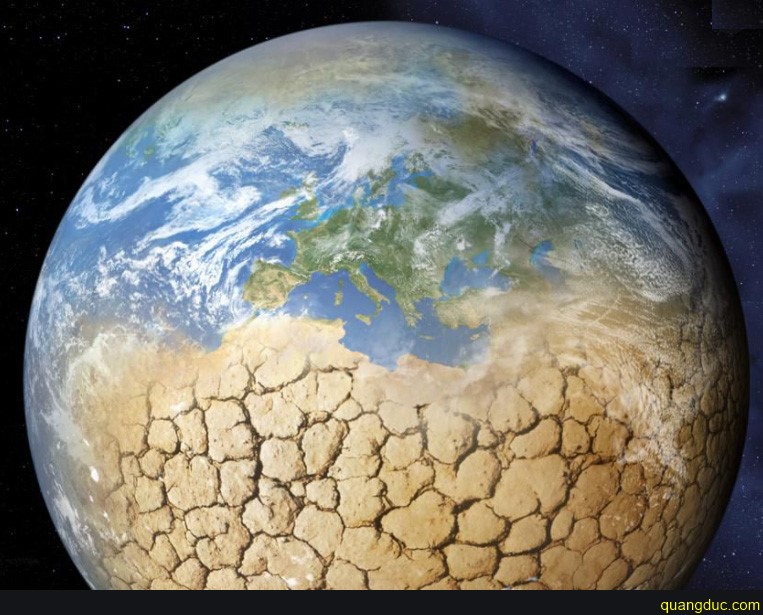
Some people have been taking the time to appreciate the beauty and biodiversity of nature, and reflect upon our place in  the interdependent web of life.   Have you noticed more wild animals appearing on the roads, in parks and waterways near where you live? Humans are now in captivity and the animals are reclaiming what is left of their garden.


Now is an opportunity to find and nurture a balance between inner and outer worlds. For the sake of this planet and all sentient beings, may your earth practice be fruitful.


***

facebook-1


***
youtube


Gửi ý kiến của bạn
Tắt
Telex
VNI
Tên của bạn
Email của bạn
16/05/2012(Xem: 13027)
In an age of heightened tensions in Australia and around the world, the message of Buddhism has never been more necessary to bring peace to communities and spiritual refuge to individuals. The challenge is how to elucidate that message so that it speaks clearly in diverse voices to different people with disparate needs and to communicate it so that it cuts through an ever-increasing information clutter. As with other organisations, religious bodies are
24/10/2011(Xem: 9566)
Karma is one of the fundamental doctrines of Buddhism. Everything that we encounter in this life, good or bad, sweet or bitter, is a result of what we did in the past or from what we have done recently in this life.
03/10/2011(Xem: 8543)
At the press meet His Holiness said that too much attention is being paid to a secondary level of difference between people and neglected the basic oneness of human beings.
29/08/2011(Xem: 9238)
The Prajna-paramita-sutra describes "prajna" as supreme, highest, incomparable, unequalled, unsurpassed thought. Prajna is wisdom, knowing or understanding.
29/08/2011(Xem: 4632)
It is commonly asserted that religion arose from the fear of danger, particularly natural dangers, such as lightning, floods, earthquakes, volcanic eruptions, and hurricanes. These dangers have threatened human beings throughout the ages. Ancient man, ignorant of the workings of nature, could not understand the causes of these natural forces. Terrified at the threat they presented, he began to search for answers. This quest precipitated an interest in the nature that surrounded man, and a desire to find some solutions to his problems.
01/08/2011(Xem: 4255)
Buddhism goes beyond modern science in its acceptance of a wider field of knowledge than is allowed by the scientific mind. Buddhism admits knowledge arising from the sense organs as well as personal experiences gained though mental culture. By training and developing a highly concentrated mind, religious experience can be understood and verified. Religious experience is not something which can be understood by conducting experiments in a test-tube or examined under a microscope.
01/08/2011(Xem: 4486)
Ngày xưa, có hai vợ chồng son nhà nghèo. Họ đều sinh nhai bằng nghề làm thuê làm mướn. Tuy nghèo nhưng họ rất yêu nhau.
01/08/2011(Xem: 4964)
The eminent scientist, Bertrand Russell, has summed up the position of present-day philosophical thought follows: '' Assuming physics to he broadly speaking true, can we know it to be true, and if the answer is to be in the affirmative, does this involve knowledge of other truths besides those of physics? We might find that, if the world is such as physics says it is, no organism could know it to be such or that, if an organism can know it to be such, it must know some things other than physics, more particularly certain principles of probable inference".
01/08/2011(Xem: 5809)
Buddhism, that oldest world religion, is generally misconceived to be a blind faith. As seen from its outward appearance, really it is painted with a strong religious color. To a non-Buddhist, who sees the golden image of Buddha, and hears the chanting of Sanscrit Sutras and the clinking of the bell, Buddhism is nothing but idolatry; in view of their passive life, Buddhists of the Order are said to be "social parasites".
01/08/2011(Xem: 4874)
"My brief remarks cannot do justice to the wide-ranging sweep of these papers and their thoughtful treatment of often difficult concepts. Wallace's volume is an important contribution to the emerging dialogue between Buddhism and science, and to the larger rapprochement between science and spirituality."
