Buddhist View
on Death and Rebirth
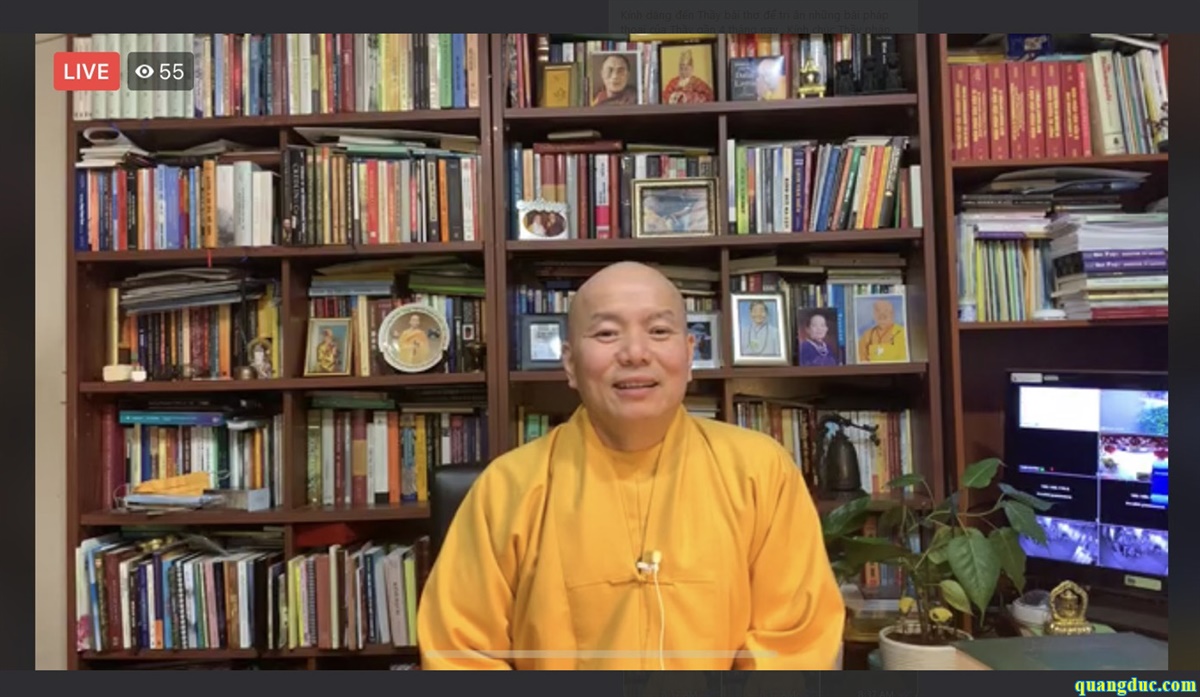
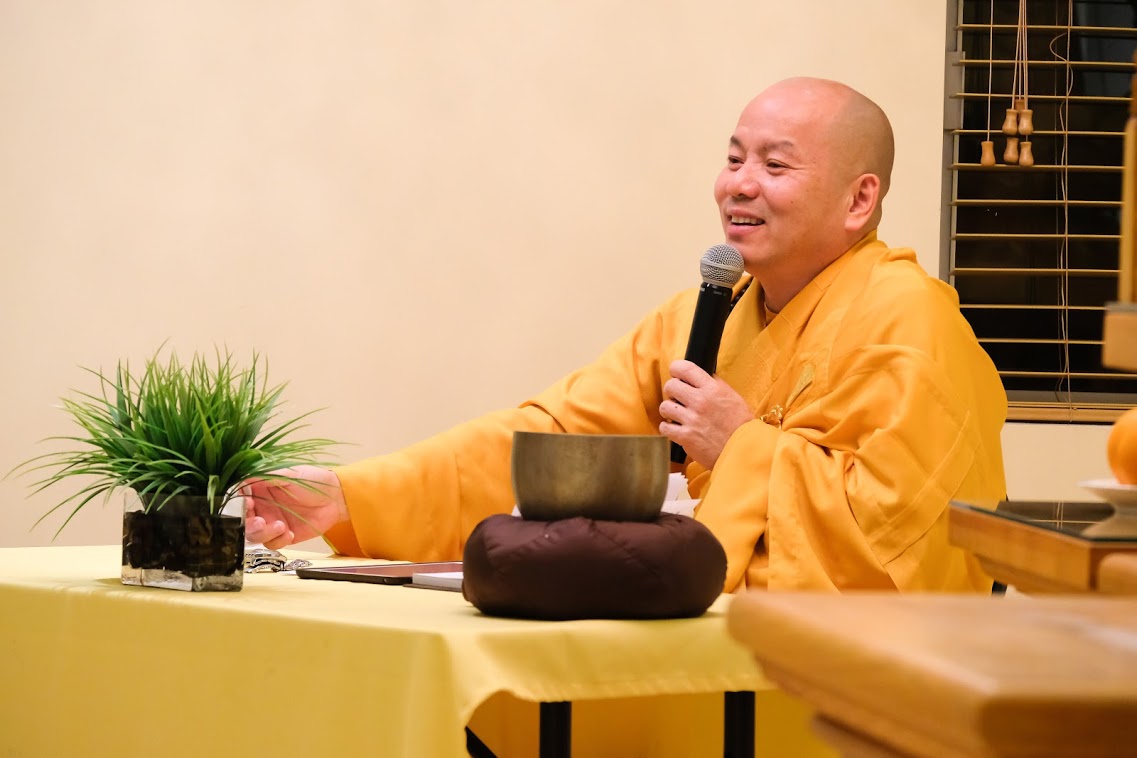
Senior Venerable Thich Nguyen Tang
As a Vietnamese Buddhist monk serving as a Buddhist chaplain in several hospitals across Melbourne, as well as at the Melbourne Assessment Prison, I have witnessed numerous personal tragedies experienced by the living, along with the profound realities of dying and death. Many individuals, especially those approaching the end of life, often face their final moments with fear, suffering, and deep emotional pain.
Bearing these experiences in mind, I would like to share some reflections from a Buddhist perspective. It is my sincere hope that such understanding may help ease the fear surrounding death and allow individuals to approach this inevitable transition with greater calmness and acceptance. For, according to the Buddhist view, death is not the end of life, but rather a continuation within the cycle of existence.
Death and the Impermanence of Life
In the teachings of the Buddha, all beings must inevitably pass away as part of the natural cycle of birth, aging, sickness and death. For this reason, we are encouraged to reflect deeply on the impermanent nature of life, the very life that we cherish and often strive to hold onto. As the Buddha clearly reminds us: “All conditioned things are impermanent—when one sees this with wisdom, one turns away from suffering.”[1]
From a Buddhist perspective, however, death is not the end of life. Rather, it marks the end of the physical body that we temporarily inhabit in this lifetime. The stream of consciousness continues, propelled by attachment and conditioned tendencies, seeking a new existence and a new form. Where one is reborn depends upon past actions, the accumulation of wholesome and unwholesome deeds, and the law of karma, the principle of cause and effect that governs all existence.
This process of continuation is not random, but deeply structured. According to Buddhist cosmology, beings may be reborn into one of six realms of existence: the heavenly realm, the human realm, the realm of asuras, the realm of hungry ghosts, the animal realm, or the hell realms. These realms are not eternal destinations but temporary states shaped by karma. As taught in the Buddhist tradition, “Beings are the owners of their actions, heirs to their actions; their actions are the womb from which they are born.”[2]
Thus, in Buddhism, life does not truly end; it continues in different forms according to the momentum of past actions. Impermanence governs not only this present life but all realms of existence. With this understanding, death need not be feared, for it is not annihilation but a transition within the ongoing flow of becoming.
The fear of death often arises from the fear of non-existence, the loss of identity and our sense of grounding in the world. Yet even before death arrives, we begin to see its shadow through the signs of impermanence. We witness constant change around us and within ourselves: the gradual process of aging, the fading of youth, and the inevitable experience of loss. Once strong and full of vitality, we eventually come to realize how fragile and fleeting our sense of comfort truly is.
In the Tibetan Buddhist tradition, great masters remind us that contemplation of death is not meant to create fear, but to awaken wisdom and urgency in practice: “Of all footprints, that of the elephant is supreme; of all contemplations, that of death is supreme.”[3]
Through such reflection, one learns not to cling, but to live more mindfully, with clarity, compassion, and purpose.
Grieving
It is natural to grieve the loss of family members and those we have known, as we gradually adjust to life without their presence and come to feel the depth of their absence in our daily lives. The death of a loved one, or even someone with whom we were not especially close, can be a profoundly painful experience. As time passes and more people we know depart along the journey of life, we are gently but inevitably reminded of our own mortality, and of the fleeting, transient nature of all existence.
At certain moments, the world may suddenly appear empty, and the sense of loss can feel overwhelming, almost timeless in its intensity. The deeper the grief and personal loss, the more one may be inclined to turn inward in sorrow, feeling isolated in one’s suffering.
The Buddha, however, offered a powerful teaching to help transform grief into wisdom. Many may recall the story of a grieving mother, known as Kisagotami, who came to the Buddha in deep anguish, carrying the lifeless body of her child and pleading for him to bring the child back to life. The Buddha gently instructed her: “Bring me a mustard seed from a household where no one has ever died, and I will help you.”[4]
As she went from house to house, she found that every family had experienced loss; there was no home untouched by death. Through this realization, her grief was transformed into understanding. She came to see that death is universal—an inseparable part of human existence.
In the words of the Buddha: “All tremble at violence; all fear death. Comparing oneself with others, one should neither kill nor cause others to kill.” [5]
While this teaching speaks of compassion, it also reminds us of a shared human condition: all beings are subject to death, and none can escape it.
Through such insight, grief does not disappear immediately, but it is gradually softened by wisdom. One begins to understand that loss, though deeply painful, is not personal or isolated, it is part of the universal nature of life itself.
Karma
According to Buddhism, our lives, and all that occurs within them, are shaped by karma. Every action we perform creates new karma. These actions arise through body, speech, and mind, and each leaves a subtle imprint upon consciousness. These imprints carry the potential to ripen in the future as either happiness or suffering, depending on whether the original actions were wholesome or unwholesome.
If we bring happiness to others, we create the conditions for our own happiness. If we cause suffering, we will inevitably experience suffering, whether in this life or in a future one. As the Buddha taught: “Beings are the owners of their actions, heirs to their actions; their actions are the womb from which they are born.”[6]
This principle is known as the Law of Karma, the Law of Cause and Effect. It governs not only the course of our present life but also the process of rebirth. At the time of death, the continuum of consciousness is directed toward a new existence in a realm that corresponds to one’s accumulated karma.
In the Tibetan Buddhist tradition, His Holiness the 14th Dalai Lama emphasizes that cultivating wholesome karma is one of the most meaningful ways to prepare for death. By refraining from harmful actions, such as killing, lying, sexual misconduct, and intoxication—and by nurturing a pure and compassionate mind, one creates the conditions for a peaceful and dignified passing. As he teaches: “The purpose of our lives is to be happy, and the basis of happiness is a good heart.”[7]
The way we die reflects the way we have lived. A good death is the natural outcome of a good life. As Leonardo da Vinci beautifully observed: “Just as a well-spent day brings happy sleep, so a life well spent brings a happy death.”[8]
Conversely, if one has lived a life marked by emotional turmoil, conflict, selfish desire, and indifference toward others, the final moments are often filled with regret, fear, and distress. It is therefore far more meaningful to care for the well-being of others than to focus solely on prolonging life at all costs. Rather than investing excessive resources in extending life for a privileged few, we should strive to relieve suffering in practical and compassionate ways.
Ultimately, improving the moral and spiritual quality of life enhances its true value for all. A life grounded in compassion, generosity, and ethical conduct brings not only individual peace but also collective well-being, far beyond the narrow confines of self-centered pursuit.
Preparing for Death and Buddhist Rituals Associated with Dying
Buddhist clergy often remind their followers of the nearness of death, emphasizing the importance of understanding death and taking time to prepare for one’s own passing. Awareness of death is not meant to create fear, but to cultivate wisdom, urgency, and clarity in how we live our lives.
How, then, do we prepare for death? In essence, the answer is simple: we strive to live in a way that is responsible, wholesome, and beneficial, both for ourselves and for others. Such a way of living naturally leads to inner calm, happiness, and a stable state of mind, allowing one to face death with composure and dignity.
As the Buddha taught: “One should make oneself an island, strive diligently; the wise person becomes pure and reaches a place beyond sorrow.”[9]
Through living mindfully, cultivating compassion, and remaining aware of the impermanent nature of life, we gradually free ourselves from fear. In contrast, fear arises when we cling selfishly to life, having not cultivated genuine inner peace or happiness.
Having lived a responsible and compassionate life, free from regret, one is able to surrender peacefully to the inevitable. Death, in such a case, need not be a painful or fearful experience, but can unfold with a sense of acceptance and grace. For this reason, a dying Buddhist often requests the presence of a monk, nun, or spiritual companion to provide guidance and support, helping to ensure that the transition is as peaceful and free from fear as possible.
Before and at the moment of death, and even for a period afterward, monastics or spiritual friends recite prayers and chant passages from Buddhist scriptures. In many traditions, this chanting is considered extremely important, as it may be among the final impressions received by the dying person. It is believed that such support can help calm the mind and guide consciousness toward a more favorable rebirth.
Buddhist teachings emphasize that the final moment of consciousness is of great significance. Tibetan masters, in particular, stress that the state of mind at the moment of death has a powerful influence on the next rebirth. As expressed in Tibetan tradition: **“At the moment of death, the mind is most subtle and most powerful; whatever state it takes will direct the future.”[10]
In practical terms, when a person is critically ill and nearing death, family members are encouraged to invite a Buddhist monastic to offer prayers and guidance. This helps to generate a wholesome and peaceful mental state in the dying person, enabling a more favorable transition into the next life.
After death, it is customary in many Buddhist traditions that the body should not be disturbed immediately. Family members and caregivers are often advised to wait several hours, traditionally between three to eight hours, before touching the body. This is based on the belief that consciousness may still be in a transitional state and can be affected by external disturbance. Therefore, the body should be treated gently and with deep respect, allowing the consciousness to depart peacefully without confusion or agitation.
In Mahayana Buddhism, particularly within the Vietnamese tradition, prayers are offered for the deceased over a period of forty-nine days. This period is traditionally understood as the intermediate state during which rebirth may occur. As taught in the Mahayana scriptures: “In the intermediate state, the power of karma determines the place of rebirth, just as a seed carried by the wind finds its ground.”[11]
While rebirth may occur sooner, in three days, twenty-one days, or even later, this forty-nine-day period is regarded as especially significant. During this time, the prayers and meritorious actions of the living are believed to support the deceased, helping guide them toward a peaceful and favorable rebirth.
Rebirth
The concept of rebirth, or reincarnation, has gained increasing attention in the West in recent decades, particularly through the influence of Tibetan Buddhism. Works such as The Tibetan Book of Living and Dying by Sogyal Rinpoche (1992) have become widely read, especially among those seeking alternative perspectives on life, death, and the continuity of consciousness. As a result, many people have developed a deeper interest in questions concerning life beyond death and the nature of existence.
From a Buddhist perspective, rebirth is not the continuation of a fixed self, but the ongoing process of consciousness conditioned by karma. As the Buddha explained: “It is not the same, nor is it entirely another—what continues is the stream of causes and conditions.”[12]
Thus, rebirth represents continuity without permanence, a dynamic process shaped by intentional actions.
Nirvana
The supreme aim of Buddhism is the attainment of Nirvana, often translated as enlightenment or liberation. Nirvana represents the complete freedom from the limitations of conditioned existence and the cessation of the cycle of birth and rebirth across the six realms. It is realized through the extinguishing of craving, attachment, and ignorance.
Nirvana is not merely a distant goal, but a state that can be realized in this very life through right understanding, ethical living, and the purification of the mind. As the Buddha described it: “There is, monks, an unborn, unbecome, unmade, unconditioned; if there were not this unborn, unbecome, unmade, unconditioned, there would be no escape from the born, the become, the made, the conditioned.”[13]
Those who attain this state are liberated from the cycle of suffering and are no longer subject to rebirth. The Buddha himself realized enlightenment at the age of thirty-five. However, it is understood in Buddhist teaching that complete final Nirvana (Parinirvana) occurs at the passing away of the physical body, when all residual conditions of existence come to an end.
The Six Realms of Rebirth
According to Buddhist teaching, if one has not yet attained enlightenment, one continues within the cycle of rebirth (samsara), taking existence in one of six realms according to one’s karma. These realms, from highest to lowest, are as follows:
Heaven (Deva Realm):
There are multiple heavenly levels in which beings experience great happiness, longevity, and refined pleasure. However, even these states are impermanent and subject to eventual decline.
Human Realm:
Human existence is considered especially precious, as it provides the optimal conditions for spiritual practice. One may be reborn in various circumstances, wealthy or poor, fortunate or difficult, depending on past karma.
Asura (Demi-god Realm):
Beings in this realm possess power and intelligence but are dominated by jealousy and competition. They constantly struggle due to dissatisfaction and comparison with the heavenly beings above them.
Hungry Ghost (Preta Realm):
This realm is characterized by insatiable craving. Beings here suffer from intense hunger and thirst, yet are unable to find satisfaction, reflecting the karmic result of greed and attachment.
Animal Realm:
Beings in this realm live in ignorance and fear, often subject to exploitation and survival instincts. This rebirth is associated with actions rooted in delusion and harmful behavior.
Hell Realm:
The hell realms represent states of extreme suffering and torment, resulting from severe negative karma. Although the duration may be exceedingly long, even these states are not eternal.
As taught in the Tibetan Buddhist tradition: “Samsara is not a place but a condition, created by our own actions and experienced through the mind.”[14]
Conclusion
To conclude, as already mentioned, none of us can escape death. Unless we are liberated from the cycle of birth and rebirth, we remain bound to the endless turning of existence—caught within its paradoxical nature of suffering and happiness, youth and aging, health and illness, and ultimately, death itself. This cycle persists because of our attachment to existence and our deep-rooted clinging to what is impermanent.
The Buddha therefore encouraged us to prepare for death—not with fear, but with wisdom and clarity. Preparation for death means purifying the mind, loosening our attachment to possessions, identities, and desires, and learning the art of letting go. As the Buddha taught: “Let go of the past, let go of the future, let go of the present, and cross over to the farther shore of existence.”[15]
Through this practice of letting go, we reduce our suffering at the final stage of life. We learn to accept, to be grateful for what we have experienced, yet not to cling to it. In doing so, we avoid creating further attachment and unnecessary suffering. Instead, we cultivate a peaceful mind that is ready to release and move on without fear or regret.
Ultimately, by living with wisdom, compassion, and non-attachment, we open the path toward liberation. As taught in the Buddhist tradition: “There is no path to peace; peace is the path.”[16]
When the causes of attachment are extinguished, the cycle of birth and death comes to an end, and one attains Nirvana, the complete freedom from all suffering and the final release from the cycle of rebirth.
( This speech has been presented at the conference Dying, Death and Grieving a cultural Perspective, RMIT University, Storey Hall, 349 Swanston Street, Melbourne, Victoria, 22nd and 23rd March 22, 2002. For further information on the conference, please contact Lynn Cain, +61-3-9457 4697).
[1] Dhammapada, verse 277, in Acharya Buddharakkhita, trans., The Dhammapada (Kandy: Buddhist Publication Society, 1985).
[2] Bhikkhu Bodhi, trans., The Numerical Discourses of the Buddha (Anguttara Nikaya) (Boston: Wisdom Publications, 2012), AN 5.57.
[3] Attributed in Tibetan tradition; see Sogyal Rinpoche, The Tibetan Book of Living and Dying (San Francisco: HarperCollins, 1992), 27.
[4] Dhammapada Commentary, story of Kisagotami; see also Acharya Buddharakkhita, trans., The Dhammapada (Kandy: Buddhist Publication Society, 1985), commentary on verse 114.
[5] Dhammapada, verse 129, in Acharya Buddharakkhita, trans., The Dhammapada (Kandy: Buddhist Publication Society, 1985).
[6] Bhikkhu Bodhi, trans., The Numerical Discourses of the Buddha (Anguttara Nikaya) (Boston: Wisdom Publications, 2012), AN 5.57.
[7] Dalai Lama XIV, The Art of Happiness (New York: Riverhead Books, 1998), 3.
[8] Leonardo da Vinci, The Notebooks of Leonardo da Vinci, ed. Edward MacCurdy (London: Duckworth, 1906).
[9] Dhammapada, verse 236, in Acharya Buddharakkhita, trans., The Dhammapada (Kandy: Buddhist Publication Society, 1985).
[10] Sogyal Rinpoche, The Tibetan Book of Living and Dying (San Francisco: HarperCollins, 1992), 11–12.
[11] Kṣitigarbha Bodhisattva Pūrvapraṇidhāna Sūtra, trans. in standard Mahayana liturgical texts.
[12] Bhikkhu Nanamoli and Bhikkhu Bodhi, trans., The Middle Length Discourses of the Buddha (Majjhima Nikaya) (Boston: Wisdom Publications, 1995), MN 38.
[13] Udana 8.3, in John D. Ireland, trans., The Udana and the Itivuttaka (Kandy: Buddhist Publication Society, 1997).
[14] Sogyal Rinpoche, The Tibetan Book of Living and Dying (San Francisco: HarperCollins, 1992), 92.
[15] Dhammapada, verse 348, in Acharya Buddharakkhita, trans., The Dhammapada (Kandy: Buddhist Publication Society, 1985).
[16] Attributed to the Buddha in modern Buddhist teaching; see Thich Nhat Hanh, Peace Is Every Step (New York: Bantam Books, 1991).
***



%7Cutmcsr%3D(direct)%7Cutmcmd%3D(none)%3B%2B__utmv%3D226761065.-%3B)