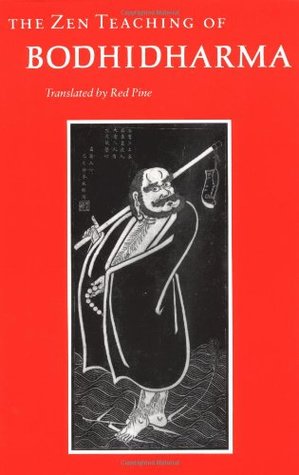
Bodhidharma
Born: 483 AD, India
Died: 540 AD, Shaolin Monastery, Zhengzhou, China
Over one thousand five hundred years ago in China, there lived an emperor named Wu. He was a great patron of Buddhism and he dearly wanted a great Buddhist teacher from India to come and spread the message of Buddhism. He set in motion elaborate work to see that Buddhism spread to the people of his land. These preparations went on for many years and the emperor waited and waited, but no teacher came.
Then one day, when the emperor was over sixty years old, a message was sent across that two great, fully enlightened teachers would cross the Himalayas and come and spread the message in China. There was great excitement and the emperor prepared a big celebration in anticipation of their arrival. After a few months of waiting, two people appeared at the border of the Chinese kingdom. They were Bodhi Dharma and one of his disciples.
Bodhidharma: Messenger to China
Bodhidharma was born a prince in the Pallava Kingdom in South India. He was the son of the king of Kanchipuram, but at an early age, he left his kingdom and princehood and became a monk. At the age of twenty-two he was fully enlightened, and that was when he was sent as a messenger to China. The moment the news of his arrival came, Emperor Wu himself came to the borders of his empire and set up a huge reception and waited.
When these monks came, weary from the long travel, Emperor Wu looked at the two of them and was greatly disappointed. He was told that an enlightened being would be coming and was expecting something, but this was a mere boy of twenty-two years. Worn by the travel of a few months in the mountains, Bodhidharma was really not looking very impressive.
The emperor was disappointed but he contained his disappointment and welcomed the two monks. He invited them into his camp and offered them a seat and food. Then, at the first opportunity he got, Emperor Wu asked Bodhi Dharma, “Can I ask you a question?”
Bodhidharma said, “By all means.”
Emperor Wu asked, “What is the source of this creation?”
Bodhidharma
Bodhidharma looked at him, laughed, and said, “What kind of foolish question is that? Ask something else.”
Emperor Wu was extremely offended. He had a whole list of questions to ask Bodhidharma, questions that he thought were deep and profound. He had held many debates and discussions about this particular question, and now this fool of a boy who came from nowhere just dismissed it as a foolish question. He was offended and angry but he contained himself and said, “Okay, I will ask you a second question. What is the source of my existence?”
Now Bodhidharma laughed even louder and said, “This is an utterly stupid question. Ask something else.” If the emperor had asked about the weather in India or about Bodhidharma’s health, Bodhidharma would have answered. But this man was asking, “What is the source of creation? What is the source of who I am?” He brushed this off.
It was Bodhi Dharma who brought Zen to China.
Now Emperor Wu became really angry but he contained himself and asked the third question. He made a list of all the good things that he had done in his life – how many people he had fed, how many things he had done, all the charity that he had given and finally he said, “To spread the dharma, to spread Buddha’s message, I have built so many meditation halls, hundreds of gardens, and trained thousands of translators. I have made all these arrangements. Will I get mukti?”
Now Bodhidharma became serious. He stood up and glared down at the emperor with his huge big eyes and said, “What? You! Mukti? You will burn in the seventh hell.”
What he meant was, according to the Buddhist way of life, there are seven layers of the mind. Instead of just doing what is needed, if a man does something and then keeps accounts of it, “How much I have done for somebody,” he is in the lowest level of the mind and he will inevitably suffer because he is expecting people to be nice to him in return for his deeds. If they are not nice to him, he will be mentally tortured and it will be a seventh hell.
But Emperor Wu did not understand any of this. He flew into a rage and threw Bodhidharma out of his empire. For Bodhidharma, it made no difference – in or out. It doesn’t matter whether it is a kingdom or a mountain; he carried on with his journey. But Emperor Wu missed the only opportunity of his life.
Bodhidharma: The first Zen master
It was Bodhidharma who brought Zen to China. Gautama the Buddha taught Dhyan or meditation. Hundreds of years later, Bodhidharma transported Dhyan to China where it became Chan. This Chan went further down to Indonesia, Japan, and other far east Asian countries, where it became Zen.
Bodhidharma went into the mountains where he gathered a few disciples, and they would meditate in the mountain caves
After he was sent out of the empire by Emperor Wu, Bodhidharma went into the mountains. There he gathered a few disciples, and they would meditate in the mountain caves. For a meditator, the biggest enemy is sleep. The legend says that Bodhi Dharma once fell asleep while in meditation and was so furious that he cut off his eyelids. His eyelids fell to the ground and became the first tea plant. Tea was thereafter supplied to the monks as a protection against sleep.
Where does this legend come from? The hill that Bodhidharma resided in after his encounter with the emperor was known as Tai or Chai. When they went there, the monks probably found certain leaves which Bodhidharma discovered could be boiled in water and drunk to stay awake. They could then sit and meditate the whole night; and that was how tea or chai was discovered.
Bodhidharma, Chinese Putidamo, Japanese Daruma, (flourished 6th century CE), Buddhist monk who, according to tradition, is credited with establishing the Zen branch of Mahayana Buddhism.
The accounts of Bodhidharma’s life are largely legendary, and historical sources are practically nonexistent. Two very brief contemporary accounts disagree on his age (one claiming that he was 150 years old, the other depicting him as much younger) and nationality (one identifies him as Persian, the other as South Indian). The first biography of Bodhidharma was a brief text written by the Chinese monk Daoxuan (flourished 7th century) about a century after Bodhidharma’s death. As his legend grew, Bodhidharma was credited with the teaching that meditation was a return to the Buddha’s precepts. He was also credited with aiding the monks of Shaolin Monastery—famous for their prowess in the martial arts—in meditation and training. During the Tang dynasty (618–907), he came to be regarded as the first patriarch of the tradition that was subsequently known as Chan in China, Zen in Japan, Sŏn in Korean, and Thien in Vietnam. Those names correspond to the pronunciation of the Sanskrit word dhyana (“meditation”) in Chinese, Japanese, Korean, and Vietnamese, respectively. Bodhidharma was also considered to be the 28th Indian patriarch in a direct line of transmission from the Buddha.
Most traditional accounts state that Bodhidharma was a South Indian dhyana master, possibly a Brahman, who traveled to China perhaps in the late 5th century. About 520 he was granted an interview with the Nan (Southern) Liang emperor Wudi, who was noted for his good works. According to a famous story about their meeting, the emperor inquired how much merit (positive karma) he had accrued by building Buddhist monasteries and temples. To the emperor’s dismay, Bodhidharma stated that good works performed with the intention of accumulating merit were without value, as they would result in favourable rebirths but would not bring about enlightenment. Another story states that, soon after meeting the emperor, Bodhidharma went to a monastery in Luoyang, where he spent nine years staring at a cave wall in intense concentration. Still another states that, in a fit of anger after repeatedly falling asleep while attempting to practice meditation, he cut off his eyelids. (This is one reason why he was often portrayed in art with an intense wide-eyed stare.) Upon touching the ground, they sprung up as the first tea plant. The first two of these legends are like others that seem intended to offer instruction in religious truths or in the importance of concentration in religious practice. The third provided a folkloric basis for the traditional practice among Zen monks of drinking strong tea in order to stay awake during meditation. It also provided an account of the introduction of tea into East Asia.
Appearance after his Death
Three years after Bodhidharma's Death, Ambassador Song Yun of northern Wei is said to have seen him walking while holding a shoe at the Pamir Heights.
Song Yun asked Bodhidharma where he was going, to which Bodhidharma replied "I am going home".
When asked why he was holding his shoe, Bodhidharma answered "You will know when you reach Shaolin Monastery.
Don't mention that you saw me or you will meet with disaster".
After arriving at the palace, Song Yun told the emperor that he met Bodhidharma on the way.
The emperor said Bodhidharma was already dead and buried, and had Song Yun arrested for lying.
At the Shaolin Temple, the Monks informed them that Bodhidharma was dead and had been buried in a hill behind the temple.
The grave was exhumed and was found to contain a single shoe. The Monks then said "Master has gone back home" and prostrated three Times:
For nine years he had remained and nobody knew him;
Carrying a shoe in hand he went home quietly, without ceremony.
Bodhidharma133.jpg


&utmac=UA-45371836-1&utmcc=__utma%3D808191836.1418684240.1773573572375.1773573572375.1773573572375.2%3B%2B__utmb%3D808191836%3B%2B__utmc%3D808191836%3B%2B__utmz%3D808191836.1773573572375.2.2.utmccn%3D(direct)%7Cutmcsr%3D(direct)%7Cutmcmd%3D(none)%3B%2B__utmv%3D808191836.-%3B)